
Author: vgadiy

  • 10 Best Diffusers for Curly Hair to Define, Smooth, and Lift

    10 Best Diffusers for Curly Hair to Define, Smooth, and Lift

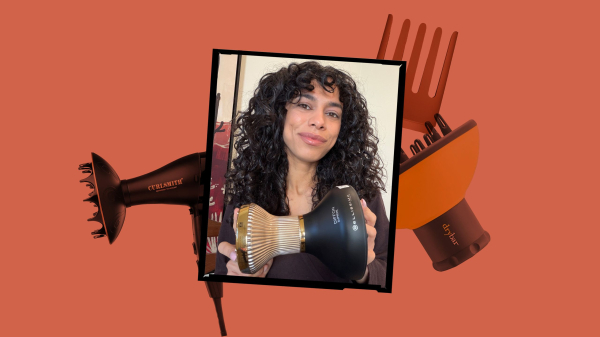
    A collage of an Allure editor holding a diffuser alongside other product silos on a redorange backgroundCollage: Jemeria Davison; Source images: Courtesy of brands and editorsSave StorySave this storySave StorySave this story

    The best diffusers for curly hair can make the difference between defined, bouncy spirals and a frizzy, deflated mess. If you're tired of cycling through cheap attachments that slip off mid-dry, universal models that create uneven heat distribution, and bulky designs that leave your arm aching before you’re halfway done, we feel you. The frustration of damp roots, over-dried ends, and crushed curls is what separates bad diffusers from good ones. The difference comes down to thoughtful engineering: even heat distribution to prevent hot spots, an appropriate bowl size that accommodates curl length and density, and an ergonomic design that works with thick hair, not against.

    Our Top Diffusers for Curly Hair

    • Best Overall: Bellissima Diffon Supreme Ionic XL Curly Hair Dryer, $169
    • Best for Mixed Curl Types: Dyson Airwrap Wave+Curl Diffuser Attachment, $40
    • Best for Type 3 and 4 Curls: Pattern The Blow Dryer, $199
    • Best for Type 2 Curls: GHD Professional Hair Dryer Diffuser, $30
    • Best for All Hair Lengths: Shark Beauty FlexStyle Curl-Defining Diffuser, $39
    • Best Universal Diffuser: Drybar The Bouncer Diffuser, $34

    Frequently Asked QuestionsAccordionItemContainerButtonLargeChevron

    • What is the difference between using a diffuser and using a blow-dryer without one?
    • How should a diffuser be used to maximize curl definition and minimize frizz?
    • Meet the experts
    • How we test and review products
    • Our staff and testers

    Of course, Allure editors have put countless diffusers to the test, but we also tapped professional hairstylists to help compile a list of 10 of the best diffusers for curly hair on the market. Ahead, discover the diffuser attachments we trust to deliver defined curls, minimal frizz, and damage-free drying.

    Best Overall: Bellissima Diffon Supreme Ionic XL Curly Hair Dryer
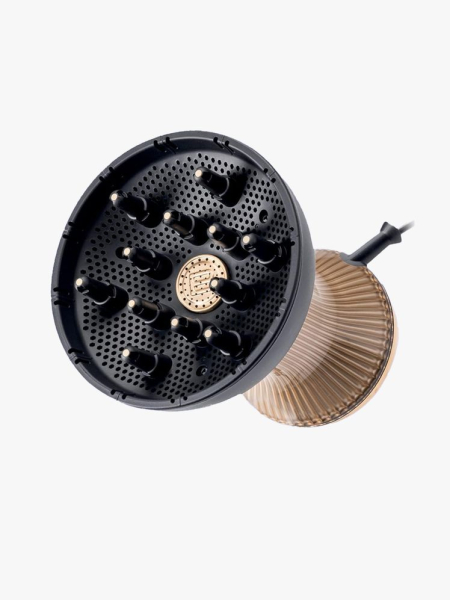
    Bellissima Diffon Supreme Ionic XL Curly Hair Dryer in branded component on a light gray backgroundSave to wishlistSave to wishlist

    Bellissima

    Diffon Supreme Ionic XL Curly Hair Dryer

    $169

    Amazon

    Allure senior commerce director Shanna Shipin using the Bellissima Diffon Supreme Ionic XL Curly Hair Dryer

    Shanna Shipin

    Why we love it: Rather than using a clip-on diffuser as an afterthought, the Bellissima Diffon Supreme builds the diffuser into the dryer itself as a dedicated tool for curly, coily, and wavy hair. The XL bowl handles extra-long and thick curls better than standard models, with digital temperature control monitoring heat constantly (50 times per second!) to prevent damage. Air flows evenly through multiple outlets in a micro-perforated grid, while the ceramic-infused argan oil coating boosts shine and cuts frizz. The Easy Hold Handle beats juggling a heavy dryer with attachments, and you can dial in your exact needs with adjustable airflow, multiple heat settings, and a cool-shot button.
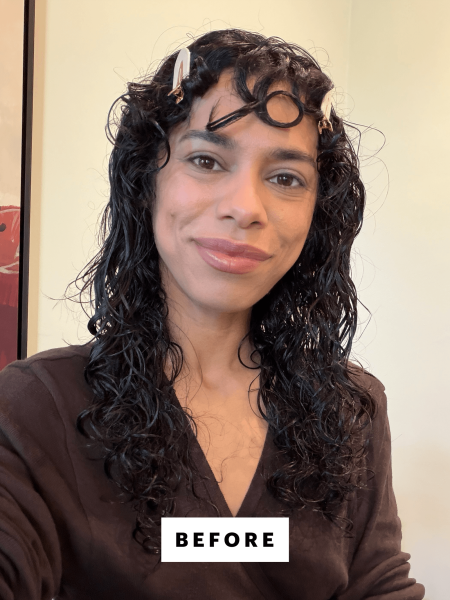
    A selfie of Allure senior commerce director Shanna Shipin before using the Bellissima Diffon Supreme Ionic XL Curly Hair...

    Shipin before using the Bellissima Diffon Supreme Ionic XL Curly Hair Dryer

    Shanna ShipinA selfie of Allure senior commerce director Shanna Shipin after using the Bellissima Diffon Supreme Ionic XL Curly Hair...
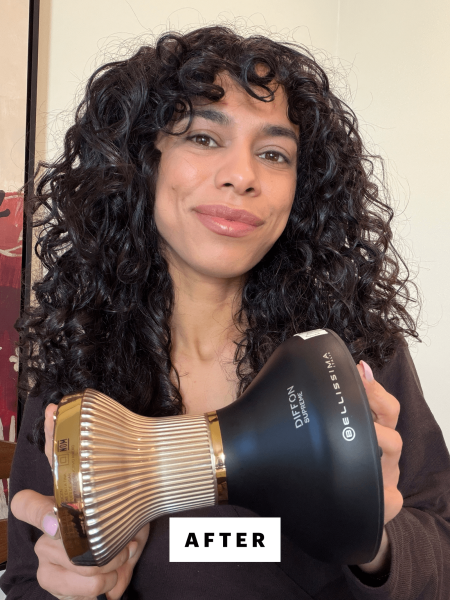
    Shipin after using the Bellissima Diffon Supreme Ionic XL Curly Hair Dryer

    Shanna Shipin

    Tester feedback from senior commerce director Shanna Shipin

    AccordionItemContainerButtonLargeChevron

    "Holy life-changing product! This diffuser gives me the juiciest, most volumized, and simply snatched curls of my life. Yes, it must be used in conjunction with a bang-on styling product (and nothing comes close to Chris McMillan's The Mousse for me), but this diffuser sends your flat, lifeless curls into the stratosphere. Talk about volume! It's lightweight and very easy to hold; that curved shape is nice and ergonomic, which is important if your hair takes a long time to dry. The large bowl is so necessary for anyone with shoulder-length or longer hair—no more second-thought attachments with too-small bowls! It's great for travel, as it's a streamlined, diffuser-only blow dryer that's easier to store than standard L-shaped dryers. It also comes with a pretty little carrying bag to keep things tidy.

    This product is a simple, straightforward hair-drying device, which eschews the cumbersome body of a typical blow-dryer and just has a diffuser head—so it's just for curly girls! There are a handful of settings you can choose from to get the head and air speed just right for your curls; there's even an ultra-gentle setting with low heat for those who have severely damaged hair (that's me!). I tend to use the lowest heat and the higher hair drying speed; that results in a somewhat frizzy look, but I'm into that effortless and somewhat undone look right now. I do turn it up to high heat and speed when I'm in a hurry and, man, does it dry fast.

    This product is on the pricey side for people who don't always wear their hair curly, but if you're even a once-a-week curly girl, I'd recommend it!" —Shanna Shipin, senior commerce director

    More to know

    AccordionItemContainerButtonLargeChevron

    • Blow-dryer compatibility: built-in integrated diffuser (not an attachment)
    • Diffuser diameter: 6 inches
    • Diffuser highlights: 112 air outlets for even distribution, digital temperature control, ceramic-infused argan oil coating

    Best for Mixed Curl Types: Dyson Airwrap Wave+Curl Diffuser Attachment
    A Dyson Airwrap Wave+Curl Diffuser Attachment on a light gray backgroundSave to wishlistSave to wishlist

    Dyson

    Airwrap Wave+Curl Diffuser Attachment

    $40

    Nordstrom

    $40

    Dyson

    Shipin using the Dyson Airwrap Wave+Curl Diffuser Attachment

    Shanna Shipin

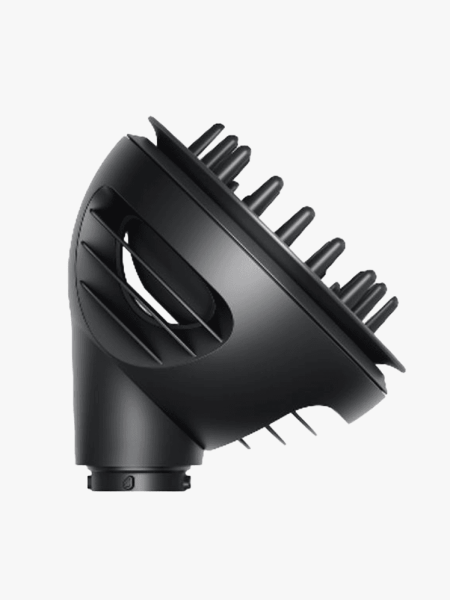
    Why we love it: Dyson's Airwrap Wave+Curl Diffuser Attachment offers a two-in-one airflow system designed for a range of curl types. The Wave+Curl diffuser features a convertible design that adjusts airflow to your hair. In Dome mode, air is drawn into the chamber and infused gently through the hair to support natural wave and curl formation without a direct blast, helping preserve pattern, reduce frizz, and improve definition. This approach aligns with the technique used by Michele Aquino, a New York City-based hairstylist: "I set it on a lower heat and airflow, gently lifting hair into the diffuser to encourage natural curl formation and maintain shape."

    In Diffuse mode, the longer prongs distribute airflow deeper into thicker sections, delivering lift and volume closer to the root for curls and coils. As you know, the Airwrap doesn't use heat, which is a major win for frizz-free curls. And despite the large bowl attachment size, the design is pretty lightweight, with Aquino adding that it "makes longer styling sessions more comfortable for both my clients and me."

    A selfie of Allure senior commerce director Shanna Shipin before using the Dyson Airwrap WaveCurl Diffuser Attachment

    Shipin before using the Dyson Airwrap Wave+Curl Diffuser Attachment

    Shanna ShipinA selfie of Allure senior commerce director Shanna Shipin after using the Dyson Airwrap WaveCurl Diffuser Attachment
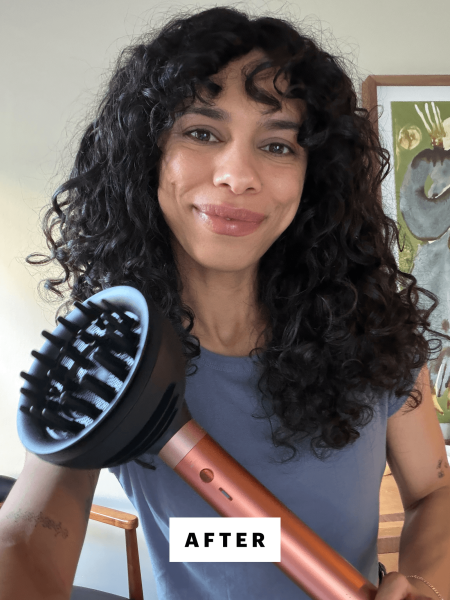
    Shipin after using the Dyson Airwrap Wave+Curl Diffuser Attachment

    Shanna Shipin

    Tester feedback from Shipin

    AccordionItemContainerButtonLargeChevron

    “The Airwrap i.d. for Curly+Coily Hair is the best Dyson tool I have ever tried—period. I have type 3A curly hair that I sometimes wear natural and sometimes blow-dry; this version of the Airwrap gets whatever look I want to achieve done in 15 minutes or less (yes!). It's thanks to the strength that you get in the Co-anda2x that can truly power the multi-styler like a standalone hair dryer. The diffuser has two settings; you can keep the diffuser with the prongs in for volume, or remove the inner body to create an inverted cone for longer styles—both are so effective at giving you bouncy and juicy curls. One really amazing feature is that the tool automatically shuts off when it senses that it’s been put down, an unexpected but much-loved perk for routine stylers like me. It's a great product for traveling and for any curly girl who likes to switch up their look.” —Shanna Shipin, senior commerce director

    More to know

    AccordionItemContainerButtonLargeChevron

    • Blow-dryer compatibility: Dyson Airwrap
    • Diffuser diameter: n/a
    • Diffuser highlights: texture-specific mode switching

    Best for Type 3 and 4 Curls: Pattern The Blow Dryer
    Pattern The Blow Dryer in branded component with multiple attachments on a light gray backgroundSave to wishlistSave to wishlist

    Pattern

    The Blow Dryer

    $199

    Ulta Beauty

    Allure creative producer Sydney Malone using the Pattern Blow Dryer

    Sydney Malone

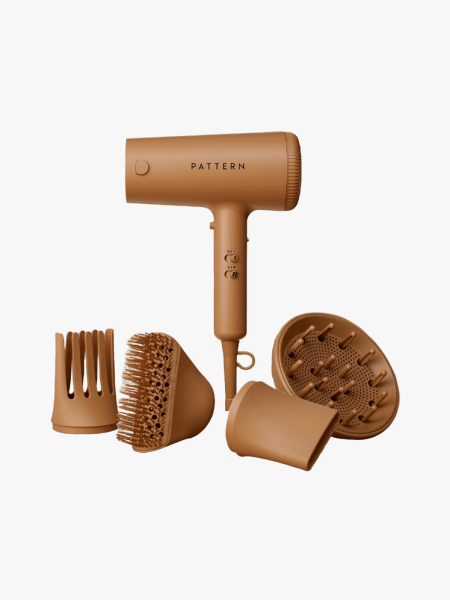
    Why we love it: Pattern's The Blow Dryer was engineered specifically for curly, coily, and tight-textured hair. The diffuser attachment features long, ventilated prongs that distribute air evenly from root to tip, plus an aluminum plate that radiates heat to accelerate drying without direct heat damage. What sets this apart is the vortex shape that controls airflow, whether you're gently sectioning strands or flipping your head upside down to diffuse at the roots. Three heat and two speed settings create six customizable combinations for different curl densities, and a lock-in cold shot sets your style in place.

    Beyond the diffuser, Pattern includes three additional attachments: a wide-tooth comb that detangles while distributing heat evenly, a brush designed for drying and stretching coils and tight textures, and a concentrator nozzle for sleeker styles. The dual-locking mechanism keeps attachments secure mid-style, and the removable filter makes cleanup easy—therefore, also extending the motor's lifespan.
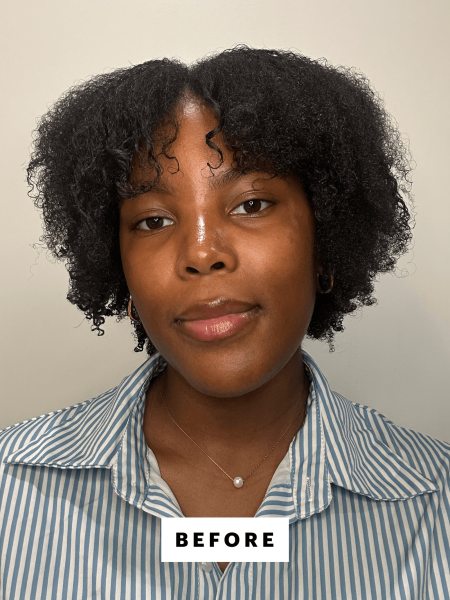
    A selfie of Allure creative producer Sydney Malone before using the Pattern Blow Dryer

    Malone before using the Pattern Blow Dryer

    Sydney MaloneA selfie of Allure creative producer Sydney Malone after using the Pattern Blow Dryer
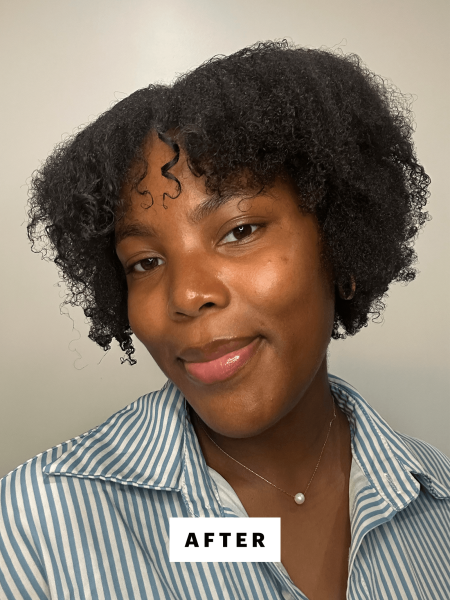
    Malone after using the Pattern Blow Dryer

    Sydney Malone

    Tester feedback from creative producer Sydney Malone

    AccordionItemContainerButtonLargeChevron

    “I like the simplicity of the Pattern Blow Dryer. The cool setting gets very cool and the multiple settings of heat and fan make it really easy to customize the temperature & feel like you are getting exactly what you need out of the use. It's not too loud and helped to dry my hair pretty quickly after washing it at night. The diffuser was a nice, large size, which was helpful as a girl with shorter hair to be able to cover more ground at once. (I imagine this would also work in favor of someone with a lot of hair as well, to be able to diffuse large sections.)

    I love all of the attachments that the blow-dryer comes with because whether I'm looking to style my curls or blow my hair straight, there are plenty of versatile tools that would make either of those styles super possible.” —Sydney Malone, creative producer

    More to know

    AccordionItemContainerButtonLargeChevron

    • Blow-dryer compatibility: Pattern Blow Dryer
    • Diffuser diameter: n/a
    • Diffuser highlights: vortex-shaped bowl, ventilated prongs

    Best for Type 2 Curls: GHD Professional Hair Dryer Diffuser
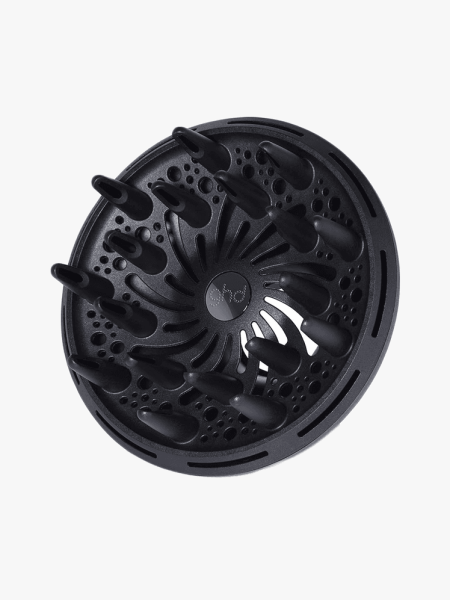
    ghd Professional Hair Dryer Diffuser in branded component on a light gray backgroundSave to wishlistSave to wishlist

    GHD

    Professional Hair Dryer Diffuser

    $30 $22 (27% off)

    Amazon

    $30

    Dermstore

    $30

    Ulta Beauty

    Why we love it: Most diffusers treat all curl types the same, but GHD's Professional Hair Dryer Diffuser was developed with top stylists to handle everything from tight coils to loose waves with its hard, contoured fingers that lift and separate hair as it dries. These structured prongs create soft volume at the roots while the perforated bowl distributes airflow evenly across your hair, which prevents the patchy drying that leads to frizz.

    What makes this attachment particularly versatile is its dual compatibility: It works directly with the GHD Air hair-dryer and includes a ring adapter for the GHD Helios, so you're not locked into a single tool. (However, just so you know, the Helios is a favorite blow-dryer for editors with both thin and thick hair.) It actively shapes curls as they dry, giving naturally curly hair a smooth, uniform finish or building loose, natural-looking waves in finer, straighter textures that typically resist holding curl.

    Allure contributor Jennifer Hussein diffusing her hair with the GHD diffuser

    Jennifer HusseinHussein after diffusing her hair with the GHD diffuser
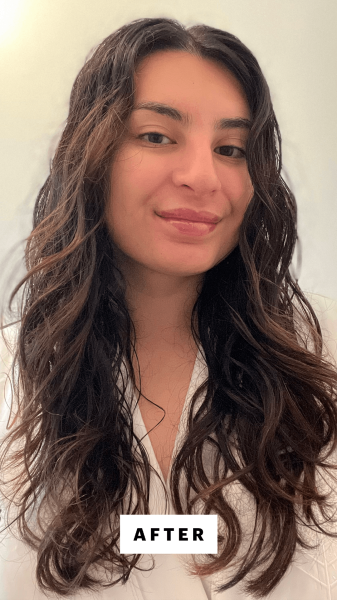
    Hussein after diffusing her hair with the GHD diffuser

    Jennifer Hussein

    Tester feedback from contributor Jennifer Hussein

    AccordionItemContainerButtonLargeChevron

    “I rarely diffuse my hair, but the GHD Helios’ diffusing attachment gave my usually flat, 2B curls some serious volume, and now I’m hooked. Its slender tips feel like a mini scalp massage and are long enough to keep heat from searing my scalp, and I’m a sucker for the sensory experience it provides.” —Jennifer Hussein, contributor

    More to know

    AccordionItemContainerButtonLargeChevron

    • Blow-dryer compatibility: GHD Air, GHD Helios (with included ring adapter)
    • Diffuser diameter: 6 inches
    • Diffuser highlights: hard contoured fingers for lift and separation, ring adapter for dual compatibility

    Best for All Hair Lengths: Shark Beauty FlexStyle Curl-Defining Diffuser
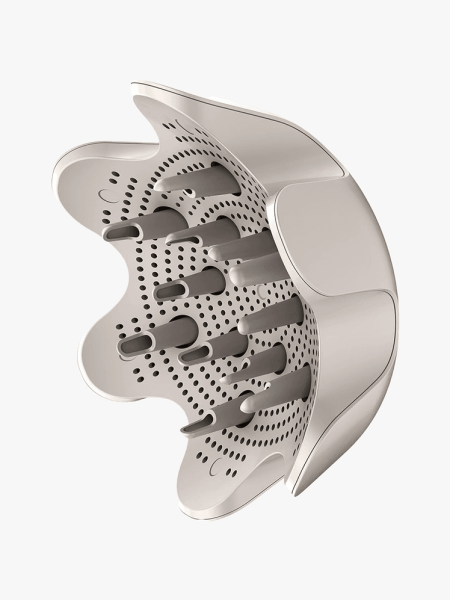
    Shark FlexStyle Diffuser in brandeds component on a light gray backgroundSave to wishlistSave to wishlist

    Shark

    FlexStyle Curl-Defining Diffuser

    $39

    Amazon

    $40

    Nordstrom

    $39

    Sephora

    Why we love it: The selling point for Shark Beauty’s FlexStyle Curl-Defining Diffuser is that any hair length can use it, thanks to its extendable and retractable prongs. Retract them for shorter, finer hair that requires less direct heat, or extend them fully to reach the roots of longer, thicker hair and add lift. The adjustable design eliminates the one-size-fits-all problem, while the perforated bowl ensures even heat distribution from root to tip for consistent drying throughout. The attachment works exclusively with the Shark FlexStyle blow-dryer system (a 2025 Best of Beauty Award winner!), which means you'll need to own that specific tool to use it. The trade-off (and notable pro) is a secure magnetic connection that doesn't budge mid-style. For curly, coily, and wavy hair types across all thicknesses, this diffuser delivers defined curls with the volume control you actually want.

    Allure contributing commerce editor Deanna Pai using the Shark FlexStyle diffuser

    Deanna PaiPai after drying her hair with the Shark FlexStyle diffuser
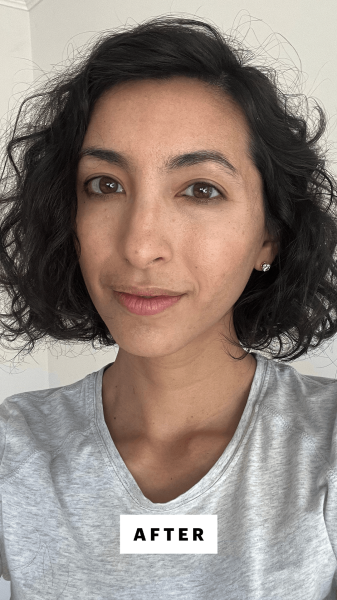
    Pai after using the Shark FlexStyle diffuser

    Deanna Pai

    Tester feedback from contributing commerce editor Deanna Pai

    AccordionItemContainerButtonLargeChevron

    “I haven't had a ton of luck with diffusers, but the Shark FlexStyle surprised me. First, I loved that the prongs were retractable—so I could make them shorter for my bob. I also found that I could get way more lift at the roots than I have with other diffusers, making this a winner in my book.” —Deanna Pai, contributing commerce editor

    More to know

    AccordionItemContainerButtonLargeChevron

    • Blow-dryer compatibility: Shark FlexStyle Air Styling & Drying System
    • Diffuser diameter: 5.79 inches
    • Diffuser highlights: extendable and retractable prongs, magnetic attachment

    Best Universal Diffuser: Drybar The Bouncer Diffuser
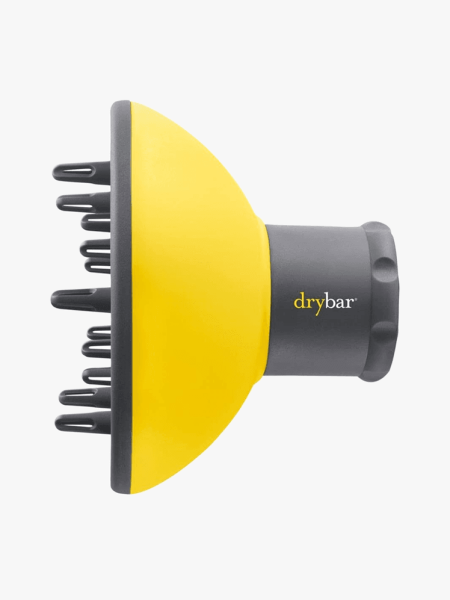
    Drybar The Bouncer Diffuser in branded component on a light gray backgroundSave to wishlistSave to wishlist

    Drybar

    The Bouncer Diffuser

    $34

    Amazon

    $34

    Nordstrom

    Why we love it: While initially designed for Drybar's Buttercup lineup, Drybar’s The Bouncer Diffuser works with most standard blow-dryers thanks to its universal nozzle, eliminating the need to match brands just to get a good diffuser. This sunshine-yellow attachment reduces the speed of your dryer's airflow while spreading it across a wider area, letting your curls dry gently without getting roughed up by concentrated heat. The extended finger prongs let you work in circular motions at the root to build lift while your curls form naturally in the bowl of the diffuser, creating definition without disrupting your curl pattern. The perforated design ensures heat distributes evenly so you're not left with damp patches near your scalp.

    Pai using the Drybar Bouncer Diffuser

    Deanna PaiPai after drying her hair with the Drybar Bouncer Diffuser
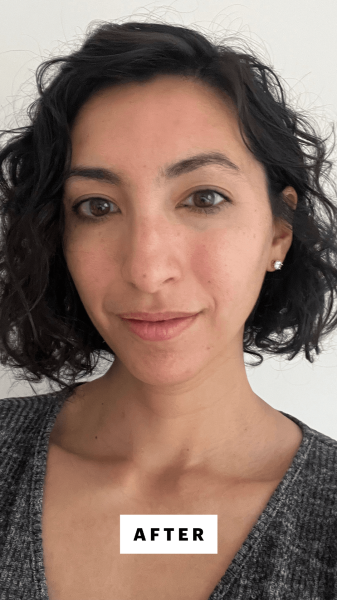
    Pai after using the Drybar Bouncer Diffuser

    Deanna Pai

    Tester feedback from Pai

    AccordionItemContainerButtonLargeChevron

    “I had no problem attaching this to both my Shark FlexStyle and more traditional T3 hair dryer. It stayed put the whole time, and while the prongs were a little long for my hair length, I loved the really wide bowl. Plus, I had little to no frizz after using this, and didn't even have to use a smoothing cream.” —Deanna Pai, contributing commerce editor

    More to know

    AccordionItemContainerButtonLargeChevron

    • Blow-dryer compatibility: Drybar Buttercup and Baby Buttercup, universal with 2-inch nozzles
    • Diffuser diameter: 6.5 inches
    • Diffuser highlights: universal nozzle attachment

    More diffusers for curly hair we like

    Best for Travel: Curlsmith Defrizzion Hair Dryer and Diffuser
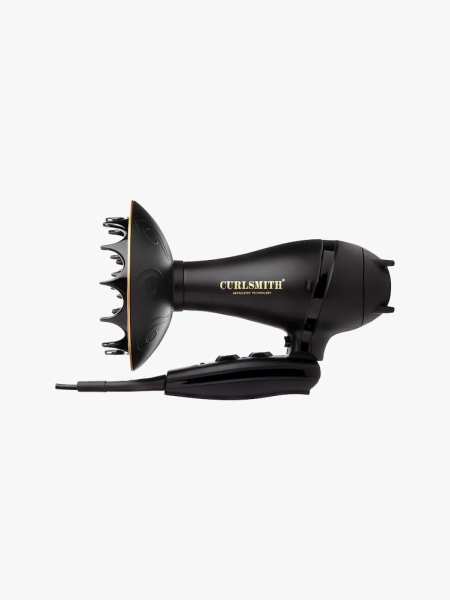
    Curlsmith Defrizzion Hair Dryer and Diffuser in branded component on a light gray backgroundSave to wishlistSave to wishlist

    Curlsmith

    Defrizzion Hair Dryer and Diffuser

    $139

    Amazon

    $139

    Ulta Beauty

    $139

    Sephora

    Why we love it: Hotel blow-dryers seldom come with a diffuser attachment, yet packing your regular dryer feels like an unnecessary hassle. Curlsmith's Defrizzion Hair Dryer and Diffuser was designed with exactly this problem in mind. Aquino says it was created “specifically for texture with an oversized diffuser and ionizing technology to help enhance natural waves, curls, and coils while reducing frizz and maintaining moisture.” The ionizing technology works to seal the hair cuticle as you dry, locking in moisture while the oversized bowl distributes gentle, even heat across larger sections of hair.

    Multiple heat and speed settings let you pixie diffuse for tighter waves, hover diffuse for curl definition, or stretch diffuse for elongated coils. "It's especially great for clients with thicker, longer, or more stubborn curl patterns who need efficient drying and definition without unnecessary heat damage," Aquino adds. The lightweight, foldable handle makes it a great travel companion without compromising on results.

    More to know

    AccordionItemContainerButtonLargeChevron

    • Blow-dryer compatibility: Curlsmith Defrizzion Travel Hair Dryer
    • Diffuser diameter: 6 inches
    • Diffuser highlights: foldable handle for travel

    Best Heat Distribution: T3 SoftTouch 3 Diffuser
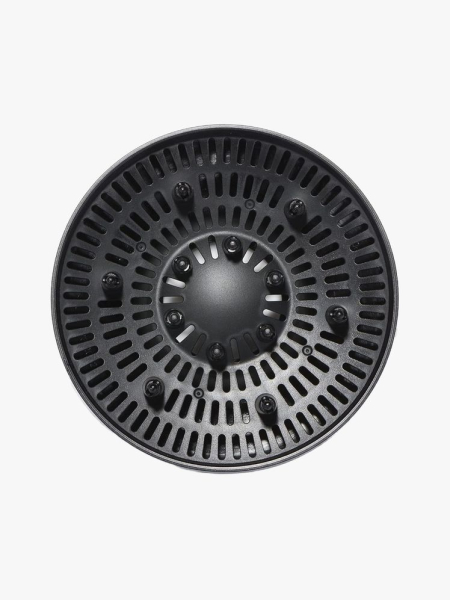
    T3 Softtouch 3 Diffuser in branded component on a light gray backgroundSave to wishlistSave to wishlist

    T3

    SoftTouch 3 Diffuser

    $30 $26 (13% off)

    Amazon

    $30

    Ulta Beauty

    $30

    Dermstore

    Why we love it: Uneven heat is one of the biggest problems with standard diffusers, leaving some sections overdried and damaged while others stay damp and frizzy. The T3 SoftTouch 3 Diffuser solves this with vented finger extensions that distribute heat evenly throughout the drying process instead of concentrating it in hot spots. The venting system allows airflow to circulate through the fingers themselves, which accelerates drying time. The finger extensions also lift and separate hair as they work, building volume and body while defining curls, waves, and coils without disrupting their natural pattern. The diffuser fits the T3 AireLuxe (our top pick for fine hair), T3 Featherweight StyleMax, and T3 Featherweight 3i models (earlier Featherweight iterations have picked up their fair share of Best of Beauty Awards)—making it a versatile option if you already have dryers within the T3 ecosystem.

    More to know

    AccordionItemContainerButtonLargeChevron

    • Blow-dryer compatibility: T3 AireLuxe, T3 Featherweight StyleMax, T3 Featherweight 3i
    • Diffuser diameter: 5.3 inches
    • Diffuser highlights: vented finger extensions

    Best Ergonomic Design: BaBylissPro Style/Switch Ionic Multi-Styler & Dryer
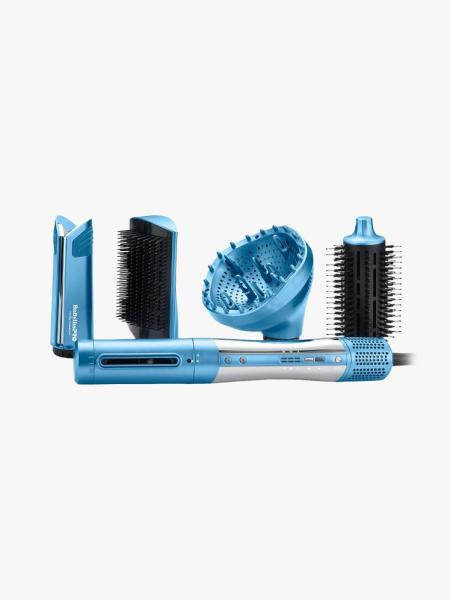
    BaBylissPro Style Switch Ionic Multi-Styler & Dryer in branded components on a light gray backgroundSave to wishlistSave to wishlist

    BabylissPRO

    Style/Switch Ionic Multi-Styler & Dryer

    $250 $187 (25% off)

    Amazon

    $250

    Ulta Beauty

    $250

    Sephora

    Why we love it: Awkward angles and arm fatigue are common complaints with traditional diffusers, but the BaBylissPro Style/Switch Ionic Multi-Styler & Dryer addresses both issues with its head-conforming, wavy perimeter and lightweight ergonomic handle. The extra-deep bowl accommodates all curl types and hair lengths, while the ionic technology reduces frizz as you dry. What sets this apart from single-purpose diffusers is the interchangeable attachment system that includes four other styling tools, smoothing, adjustable drying, and round brush attachments, so you're getting a complete styling kit. The ergonomic handle is designed to fit comfortably in your hand during extended styling sessions, weighing in at less than a pound. Plus, the dual voltage feature means it works internationally without adapters, making the already-compact design even more travel-ready.

    More to know

    AccordionItemContainerButtonLargeChevron

    • Blow-dryer compatibility: BaBylissPro Style/Switch Ionic Multi-Styler & Dryer
    • Diffuser diameter: n/a
    • Diffuser highlights: extra-deep bowl, waved-perimeter design that contours to head shape

    Best for Quick Diffusing: Conair InfinitiPro DigitalAire Hair Dryer
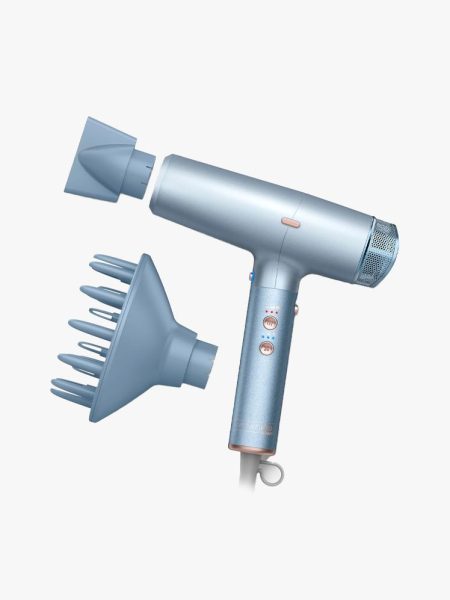
    Conair InfinitiPRO DigitalAire Hair Dryer in branded components on a light gray backgroundSave to wishlistSave to wishlist

    Conair

    InfinitiPro DigitalAire Hair Dryer

    $147

    Amazon

    Why we love it: Conair's InfinitiPro DigitalAir Hair Dryer uses a digital motor with its diffuser attachment for faster drying that doesn't disrupt curl patterns. Honeycomb ceramic technology prevents the hot spots that damage curls, while an ionic generator reduces frizz and adds shine. Finger prongs lift and separate curls naturally, and the lightweight build eliminates arm fatigue during longer sessions. With three heat and three speed settings, you can customize airflow for fine waves or thick coils, then lock everything in place with the cold-shot button. The dryer comes in blue and pink and includes a concentrator for non-curly styling.

    More to know

    AccordionItemContainerButtonLargeChevron

    • Blow-dryer compatibility: Conair InfinitiPro DigitalAire Hair Dryer
    • Diffuser diameter: n/a
    • Diffuser highlights: finger prongs for lift and separation

    Frequently Asked Questions

    What is the difference between using a diffuser and using a blow-dryer without one?

    "A diffuser is designed to disperse airflow gently and evenly, which helps preserve natural curl patterns, enhance definition, and reduce frizz," Aquino explains. "Using a blow-dryer without a diffuser directs concentrated heat and air, which can disrupt the curl structure and create unwanted volume or frizz." The core distinction is that "a diffuser works with the hair's natural texture, while a bare blow-dryer works against it, especially for curls, coils, and waves."

    How should a diffuser be used to maximize curl definition and minimize frizz?

    "To maximize curl definition and minimize frizz, a diffuser should be used on low to medium heat and low airflow, starting with properly hydrated hair and a curl-defining product applied evenly," Aquino says. "Gently cradle the curls into the diffuser and lift toward the scalp rather than blowing air directly onto the hair, allowing curls to set in their natural pattern." She adds that "it's also important to avoid touching the hair while drying and to diffuse in sections for even, controlled results."

    Meet the experts

    • Michele Aquino, a hairstylist in Riverdale, NY

    How we test and review products

    We always enlist a range of testers for any review, but hair-care products and tools are another story. While some can be used across different hair textures, lengths, curl patterns, thicknesses, colors (natural and unnatural), and concerns, many are created with specific consumers and their needs in mind. When reviewing tools, we also take into account testers’ experience levels. For instance, an innovative new blow-dryer may feature industry-leading technology, but if the only people who find it intuitive to use are professional hairstylists, we have to consider this when determining whether it is worthy of a recommendation.

    For our list of the best diffusers for curly hair, we considered each product's performance across five primary categories: product ingredients and efficacy, packaging, fragrance, texture, and product wear. Every product was determined to have excelled in each category by our editorial team, which is composed of in-house writers and editors as well as contributors—along with special consideration from board-certified dermatologists and seasoned estheticians. To learn more information on our reporting and testing processes, read our complete reviews process and methodology page.

    Our staff and testers

    A beauty product is a personal purchase. You might be searching for a face cream to address persistent dryness or a new nail product to add to your Sunday self-care routine; you may simply be browsing around for the latest launches to hit the hair market. No matter what you seek or your individual needs and concerns, Allure wants to ensure that you love anything we recommend in our stories. We believe that having a diverse team of writers and editors—in addition to the wide range of outside testers and industry experts we regularly call upon—is essential to reaching that goal.

    After all, can we really say a skin-care product is the "best" for people over 50 if the only testers we've solicited opinions from folks who have yet to hit 30? Can we honestly deem a high-end diffuser worthy of your hard-earned cash if it’s never been tested on curls? We’re proud that our staff spans a wide range of ages, skin tones, hair textures, genders, and backgrounds, which means that we are able to fairly assess any beauty product that comes into the beauty closet.

  • Bella Hadid’s Tousled Bombshell Updo Is So ’90s Pamela Anderson—See the Photos

    Bella Hadid’s Tousled Bombshell Updo Is So ’90s Pamela Anderson—See the Photos

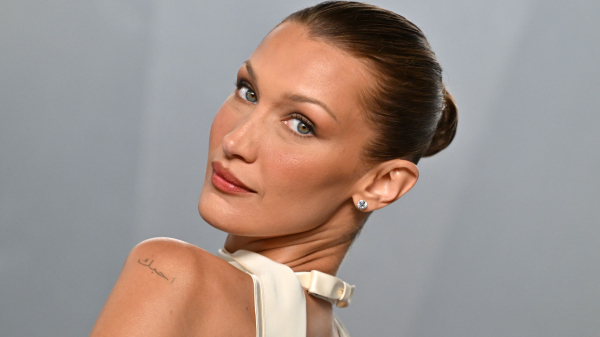
    Bella Hadid wears her hair in a sleek knot and wears a white dress.Getty ImagesSave StorySave this storySave StorySave this story

    A few years ago, Pamela Anderson revealed that the secret ingredient for her signature messy, towering ‘90s bombshell updo was a G-string, so when I saw Bella Hadid’s latest Instagram post, I had to wonder if there was a pair of underwear keeping her hairstyle in place. Probably not, but regardless of its architecture, Hadid's updo was definitely following in Anderson's footsteps: perfectly tousled and undone with tons of bombshell bravado.

    Hadid shared a few behind-the-scenes snippets from a recent Miss Sixty campaign photoshoot in what appears to be a gorgeous seaside home or hotel, resplendent with ornate antique furniture. The model's dark blonde hair, styled by Jawara, was pulled loosely up into a bun at the crown of her head, but this was not her go-to tight knot; instead, it was an explosion of curls and waves pulled out from the base for lots of va-va-volume. Swipe through a few pics for a side view, where you can better see just how towering her updo really is. Many, many softly curled tendrils descended from all angles, giving the updo even more soft texture and brushing her neck and collarbones for a flirtatious, come-hither vibe. A portion of her hair was left free and brushed over one eye for that legendary bombshell “peekaboo” effect popularized by Veronica Lake in the ‘40s and still just as beloved today. And while Hadid's updo is reminiscent of Anderson, it also reminds me of another famous bombshell upstyle: Beyoncé’s beyond-iconic B'Day look! If I could wear my hair like this every single day, I absolutely would.

    Instagram content

    The bombshell updo is a bona-fide classic, no matter who wears it. The style has gone viral on TikTok multiple times, and we've seen it walk the red carpet and pop up in editorial photoshoots and campaigns like Hadid's. Millie Bobby Brown, Kim Kardashian, and even Martha Stewart have all given it a spin in recent months. (Anderson herself has pretty much given the style a rest, preferring to experiment with French cinema-inspired haircuts and brief forays into life as a redhead.) Hair trends may come and go, but an undone bombshell updo is timeless.

    More celebrity beauty news:

    • Zendaya's “Something Blue" Hair and Makeup Has Me Under Its Spell
    • Selena Gomez Is a Y2K Queen In Pin-Straight Tendrils
    • Zara Larsson's Sparkly Butterfly Back Tattoos Are a Full-On Y2K Beauty Fantasy
  • Dr. Barbara Sturm The Peptide Serum: Review with Photos

    Dr. Barbara Sturm The Peptide Serum: Review with Photos

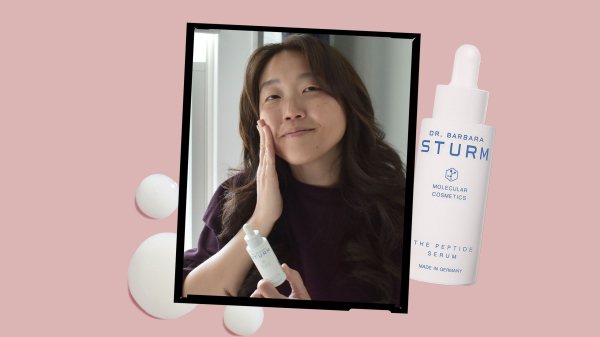
    Image contains an Allure editor applying the Dr. Barbara Sturm The Peptide SerumCollage: Paula Balondo; Source images: Courtesy of Allure editor and brandsSave StorySave this storySave StorySave this story

    If you’ve ever proclaimed your skin as “reactive,” “irritated,” or simply quick to act up, you’re not the only one. Up to 71% of adults worldwide report some level of skin sensitivity, and while it’s not exactly a clinical diagnosis, it’s a very real lived experience. Mine tends to manifest as redness, the occasional surprise hives, and general itchiness when I get too experimental. So when I came across Dr. Barbara Sturm’s The Peptide Serum and spotted the word peptides, my ears perked up. Not because peptides are the buzziest ingredient right now (though they are), but since they’re made up of short chains of amino acids your skin already recognizes, it’s less likely your skin will freak out over them.

    Spoiler alert: I didn’t exactly pace myself—I went straight in, and somehow my sensitive skin was fully on board. But don’t let the gentle reputation fool you; peptides are still putting in hard work. Here’s how it played out for me.

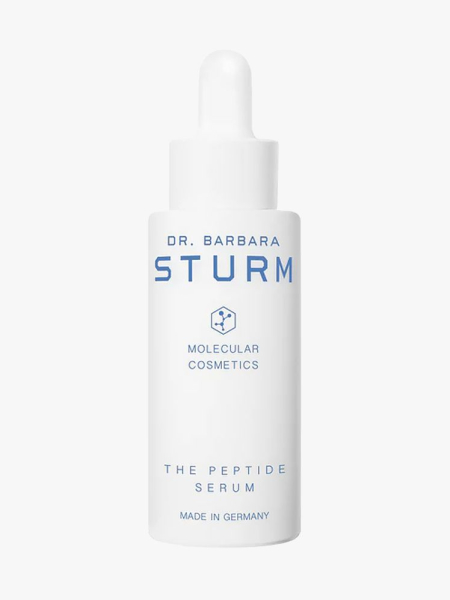
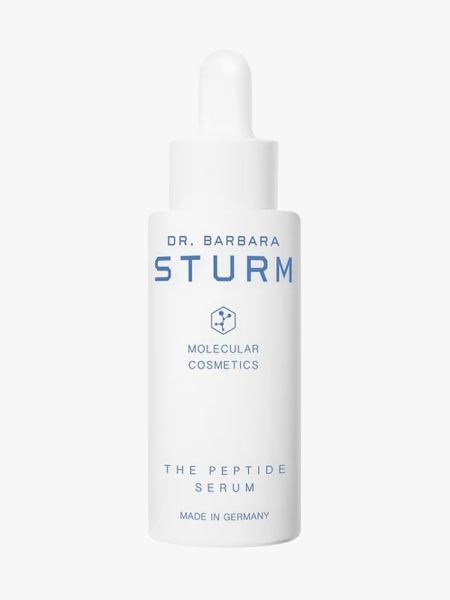
    Dr. Barbara Sturm’s The Peptide Serum in branded dropper component on a light gray backgroundSave to wishlistSave to wishlist

    Dr. Barbara Sturm

    The Peptide Serum

    $260

    Bluemercury

    First Off, What Are Peptides?

    “Peptides are strands of amino acids that act as messengers, telling skin cells what to do,” says Omer Ibrahim, MD, a board-certified dermatologist based in Chicago. If your reactive skin has ever been personally offended by retinol (same), peptides offer a gentler way in. “They can stimulate collagen like retinol, just with far less irritation,” says Dr. Ibrahim. In practice, that means signaling your skin to ramp up collagen production, slow its breakdown, and support how it repairs itself over time—all things sensitive skin tends to appreciate, adds Maryam Safaee, MD, a board-certified dermatologist based in Los Angeles.

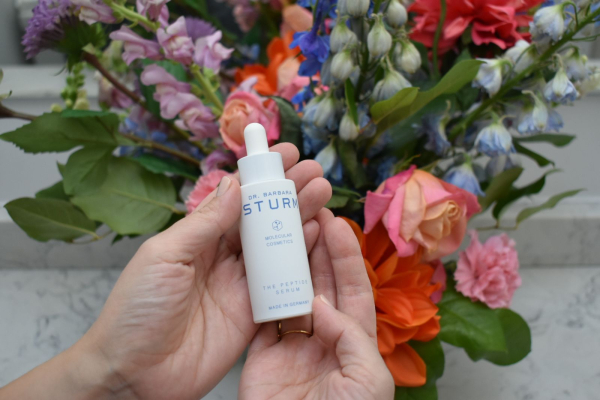
    Allure contributing commerce writer Christa Joanna Lee holding the Dr. Barbara Sturms The Peptide Serum

    Allure contributing commerce writer Christa Joanna Lee holding the Dr. Barbara Sturm The Peptide Serum

    Christa Joanna Lee

    A Closer Look at the Formula

    Dr. Barbara Sturm’s formula doesn’t rely on just one peptide. Are you ready? You’ve got acetyl octapeptide-3 and hexapeptide-3, often referred to as “neurotransmitter-inhibiting” peptides, which help limit muscle contractions so, over time, expression lines look a little softer. As Dr. Ibrahim explains, “they work similarly in concept to Botox by dialing down the intensity of repeated facial movements.” Then there’s palmitoyl pentapeptide-4 (a.k.a. Matrixyl), a longtime staple that signals fibroblasts to produce more collagen and elastin. Rounding things out, acetyl-tetrapeptide-2 and decapeptide-4 “support collagen production and act a bit like growth factors, encouraging overall skin repair,” adds Dr. Ibrahim.

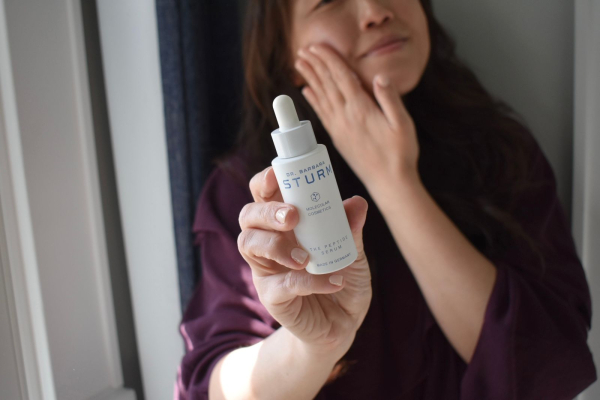
    Lee applying the Dr. Barbara Sturms The Peptide Serum

    Lee applying the Dr. Barbara Sturm The Peptide Serum

    Christa Joanna Lee

    Then there are supporting ingredients, including amino acids—glycine, proline, and arginine—which, as Dr. Safaee explains, “are essential building blocks of collagen itself.” In other words, peptides tell the skin what to make; amino acids make it happen.

    And importantly, the formula doesn’t forget about hydration: Hyaluronic acid, glycerin, and a mix of oils and butters keep the barrier intact. Because, as Dr. Ibrahim points out, “there’s no point in stimulating collagen if your skin barrier is too compromised to function properly.”

    First Impressions

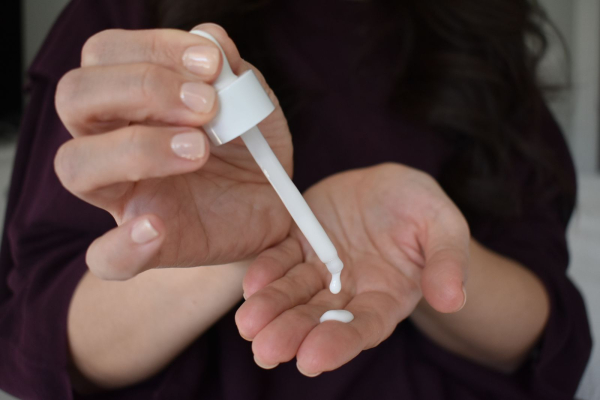
    It’s more milky than I expected from a serum, but it makes sense once you look at the formula: As mentioned, there are water-binding humectants like glycerin and hyaluronic acid, but also emollients and lipids—think shea butter, sunflower oil, almond oil, and vitamin E—suspended into that base. That combination gives it that softly opaque, almost lotion-like look.

    Lee applying the Dr. Barbara Sturms The Peptide Serum

    Lee applying the Dr. Barbara Sturm’s The Peptide Serum

    Christa Joanna Lee

    How I Used It

    I worked this into my morning and evening routines, right after cleansing and before moisturizer. The first time I used it, I noticed the faintest hint of tightness as it dried down—nothing off-putting, just something I clocked—but it disappeared completely after that. From then on, it settled in seamlessly. Three weeks in, the fragrance-free formula kept things completely calm without tingling, redness, or surprise reactions (cue: sigh of relief).

    At night, it slips easily under moisturizer; in the morning, it layers smoothly with sunscreen and makeup without pilling (just let it dry for a minute or two), which already puts it ahead of a number of serums in this category. It’s the kind of formula you don’t have to overthink. And don’t get me wrong—when you have sensitive skin, that kind of low-maintenance ease is the dream.

    The Results

    Let’s level-set expectations: This isn’t a wake-up-transformed-overnight situation (skin care rarely is). But within a couple of weeks, my skin felt noticeably calmer—less redness, smoother texture, and overall more quenched. And considering this all happened during that awkward winter-to-spring in-between (complete with seasonal allergies and a brutal cold), it had a lot working against it.

    Lee applying the Dr. Barbara Sturm The Peptide Serum

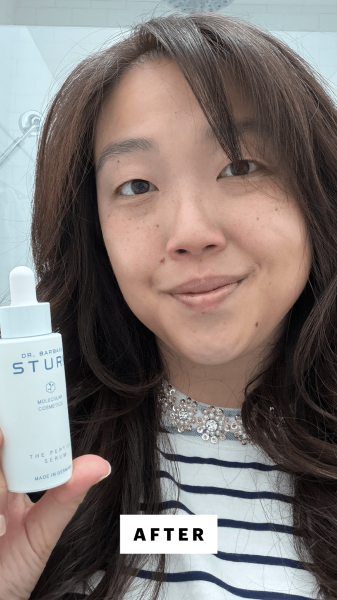
    Christa Joanna LeeLee after applying the Dr. Barbara Sturms The Peptide Serum

    Lee after applying the Dr. Barbara Sturm The Peptide Serum

    Christa Joanna Lee

    That lines up with what Dr. Ibrahim told me: “Usually improved hydration and texture can be seen within two to four weeks when using peptides, while reduced fine lines and improved firmness and elasticity may take up to six months.” He also pointed out something worth keeping in mind—peptides are doing real work, just not always in a dramatic, immediate way. “Peptides stimulate collagen production like retinol, albeit with less potential irritation, [but] the results are not as fast.”

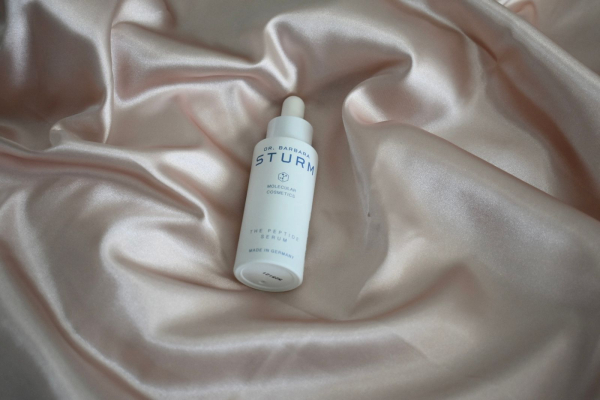
    Dr. Barbara Sturms The Peptide Serum displayed on a silk sheet

    Dr. Barbara Sturm The Peptide Serum displayed on a silk sheet

    Christa Joanna Lee

    Peptides work on a slower, steadier timeline, but the payoff is there if you stick with it. I’m curious to see how it handles the fine lines around my upper cheeks and eyes over the next few months. If your skin tends to prefer a gentle nudge over a full-on push, this one gets it.

    Dr. Barbara Sturm’s The Peptide Serum in branded dropper component on a light gray backgroundSave to wishlistSave to wishlist

    Dr. Barbara Sturm

    The Peptide Serum

    $260

    Bluemercury

    Meet the experts

    • Omer Ibrahim, MD, a board-certified dermatologist and founder of Salmalita Cosmetics, based in Chicago
    • Maryam Safaee, MD, a board-certified dermatologist based in Los Angeles
  • 8 Best Niacinamide Serums of 2026 for More Even-Toned Skin

    8 Best Niacinamide Serums of 2026 for More Even-Toned Skin

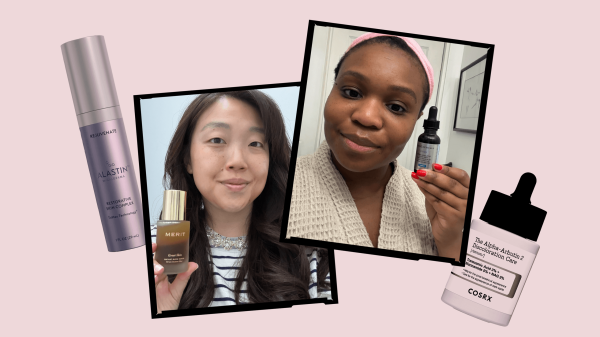
    Image contains a collage of Allure editors with niacinamide serums surrounded by a collage of niacinamide serumsCollage: Paula Balondo; Source images: Courtesy of Allure editors and brandsSave StorySave this storySave StorySave this story

    You know an ingredient has made it once it starts getting top billing in product names—and that’s exactly what’s happened with the best niacinamide serums. Once overshadowed by heavy hitters like retinol and vitamin C, his multitasking form of vitamin B3 has become a mainstay in dermatologist offices and bathroom cabinets alike. A huge part of its appeal is that it’s one of the rare actives that plays well with just about everyone. Whether your skin leans oily, dry, sensitive, or somewhere in between, niacinamide helps balance things out—regulating excess sebum, softening the look of pores, brightening uneven tone, and calming redness in the process.

    Our Top Niacinamide Serums

    • Best Overall: SkinCeuticals P-Tiox, $150
    • Best for Dry Skin: Merit Great Skin Instant Glow Serum, $42
    • Best for Dark Spots: La Roche-Posay Mela B3 Dark Spot Corrector Serum, $45
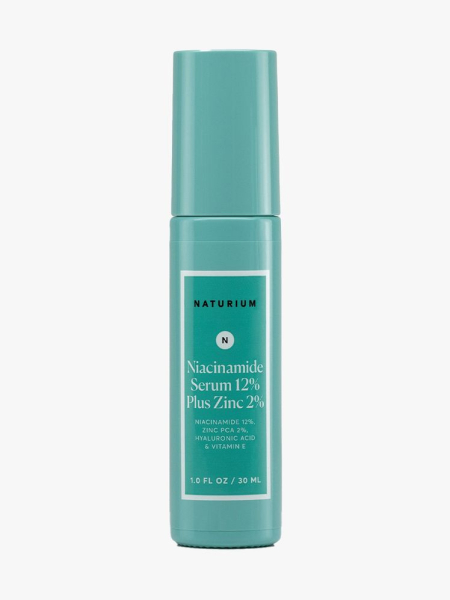
    • Best for Oily Skin: Naturium Niacinamide Serum 12% Plus Zinc 2%, $17

    It’s also refreshingly low-drama. Unlike more aggressive actives, niacinamide supports the skin barrier rather than stressing it out, which makes it easy to layer into almost any routine. And because it pairs well with ingredients like hyaluronic acid, retinoids, and even exfoliating acids, it’s less about replacing your routine—and more about making everything else work a little better.

    Frequently Asked QuestionsAccordionItemContainerButtonLargeChevron

    • What does niacinamide do?
    • Meet the experts
    • How we test and review products
    • Our staff and testers

    Best Overall: SkinCeuticals P-Tiox

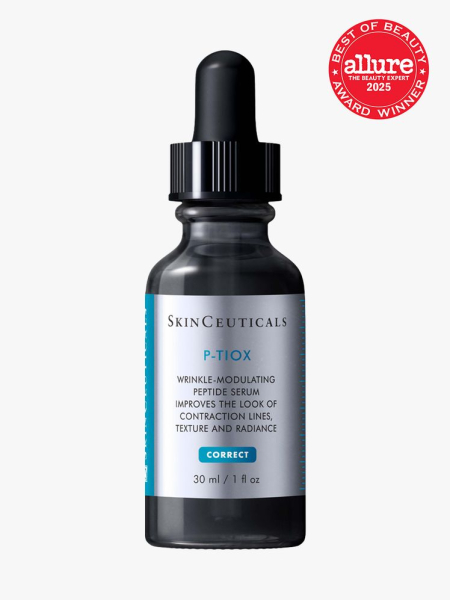
    SkinCeuticals P-TIOX in branded black bottle with black pipette on light gray background with red Allure Best of Beauty seal in the top right cornerSave to wishlistSave to wishlist

    SkinCeuticals

    P-Tiox

    $150

    Bluemercury

    Why we love it: As often as we’ve talked about SkinCeuticals P-Tiox (we’ve definitely called it “Botox in a bottle” more than once), it’s easy to assume the peptides are doing all the heavy lifting, but a closer look had us surprised to see niacinamide is actually front and center. As the first ingredient after water, it plays a major role in the formula, helping to even tone, refine the look of pores, and support the skin barrier so everything else works more efficiently.

    As for the supporting players, “this serum contains a mixture of polyhydroxy acid that gently exfoliates skin and hyaluronic acid, which attracts moisture,” says Christina Sun, MD, a board-certified dermatologist based in Philadelphia. Together, she adds, “these ingredients help moisturize skin while also decreasing the appearance of fine lines and wrinkles.”

    As mentioned, the formula also includes signal peptides, which soften expression lines over time, while sea kelp extract provides antioxidant protection to help preserve collagen. Around here, P-Tiox has become a maintenance staple—something our editors reach for between in-office treatments to help keep results looking smooth, fresh, and extend the effects of Botox just a bit longer.

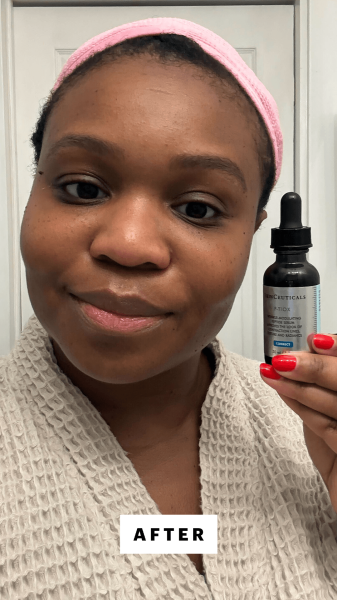
    Allure editor in chief Jessica Cruel applying SkinCeuticals’s P-Tiox

    Jessica CruelCruel after applying the SkinCeuticals PTiox

    Cruel after applying SkinCeuticals’s P-Tiox

    Jessica Cruel

    Tester feedback from editor in chief Jessica Cruel

    AccordionItemContainerButtonLargeChevron

    “There is a combination of peptides, niacinamide, and PHA in this serum to help target a very specific sign of aging: expression lines. As someone who loves to laugh, I am particularly concerned about my nasolabial folds, a.k.a. smile lines. I use this serum so they don't get any worse. I have to say, I find my filler is lasting a lot longer in that area. It is not a complete replacement for aesthetic treatments like filler or neurotoxin, but this serum can complement those in-office treatments as maintenance. I like to switch off between this and my retinol.” —Jessica Cruel, editor in chief

    More to know

    AccordionItemContainerButtonLargeChevron

    • Niacinamide percentage: 5%
    • Other key ingredients: polyhydroxy acid, laminaria extract, hyaluronic acid
    • Fragrance-free: yes

    Best for Dry Skin: Merit Great Skin Instant Glow Serum

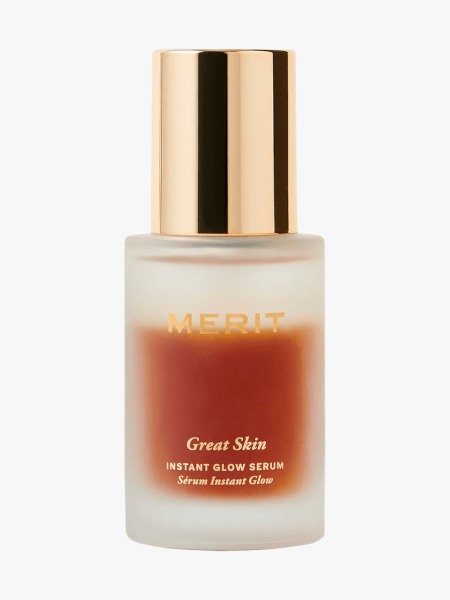
    Merit Great Skin Instant Glow Serum in frosted clear bottle with gold lidSephoraSave to wishlistSave to wishlist

    Merit

    Great Skin Instant Glow Serum

    $42

    Sephora

    Why we love it: While you might think of Merit as a makeup brand, it’s been doing skin care all along—just look at its ingredient labels for the receipts. So it wasn’t exactly shocking when the Great Skin Instant Glow Serum became its first official foray. True to form, the lightweight, bi-phase serum keeps things minimal but effective: Niacinamide helps brighten, even tone, and refine the look of pores, while multiple forms of hyaluronic acid layer in hydration for that plump, bouncy feel. There’s also cocoa seed extract (which gives it its reddish color), vitamin E for antioxidant support, plus coptis japonica root to soothe skin. The finish is fresh, glowy, and intentionally low-effort.

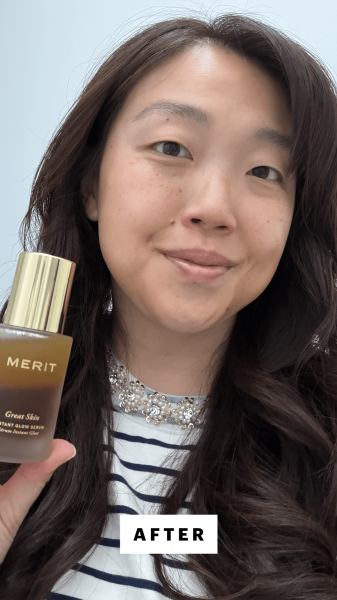
    Allure contributing commerce writer Christa Joanna Lee applying the Merit Great Skin Instant Glow Serum

    Christa Joanna LeeAllure contributing commerce writer Christa Joanna Lee after applying the Merit Great Skin Instant Glow Serum

    Lee after applying the Merit Great Skin Instant Glow Serum

    Christa Joanna Lee

    Tester feedback from contributing commerce writer Christa Joanna Lee

    AccordionItemContainerButtonLargeChevron

    “The bi-phase formula has replaced a few steps in my routine: The water phase, where the niacinamide lives, gives that fresh, lit-from-within glow, while the oil phase softens and adds a subtle, hydrating sheen. It’s noticeably lighter than most serums I’ve tried—I actually wasn’t expecting it to feel quite so splashy! Because of that, I’ve found it works best when I pat it into my skin rather than rubbing it in like I typically would with a serum.” —Christa Joanna Lee, contributing commerce writer

    More to know

    AccordionItemContainerButtonLargeChevron

    • Niacinamide percentage: undisclosed
    • Other key ingredients: cocoa seed extract, vitamin E, hyaluronic acid, coptis japonica root
    • Fragrance-free: yes

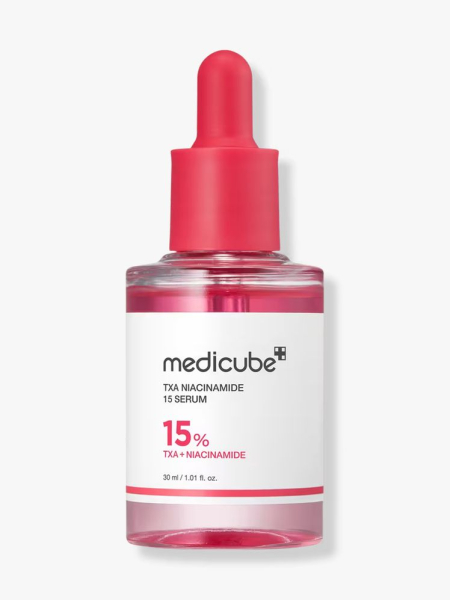
    Best for Melasma: Medicube TXA Niacinamide 15% Serum

    Medicube TXA Niacinamide 15% Serum Save to wishlistSave to wishlist

    Medicube

    TXA Niacinamide 15% Serum

    $22 $19 (14% off)

    Amazon

    $24

    Ulta Beauty

    Why we love it: With 10% niacinamide, it’s already a pretty high percentage, but add 5% tranexamic acid, and you’re in serious pigment-correcting territory. Medicube’s TXA+Niacinamide 15% Glow Facial Serum pairs that high-strength niacinamide with TXA to specifically target melasma and those stubborn post-acne marks that tend to linger. Niacinamide helps even tone and dial down excess pigment, while tranexamic acid works a little deeper, interrupting the pathways that trigger discoloration.

    Niacinamide also helps limit how much of that pigment makes it to the skin’s surface, so you’re not just fading spots, but helping prevent new ones from fully forming. Supporting ingredients like arbutin, glutathione, and ferulic acid double down on brightening, while hyaluronic acid keeps things hydrated and bouncy.

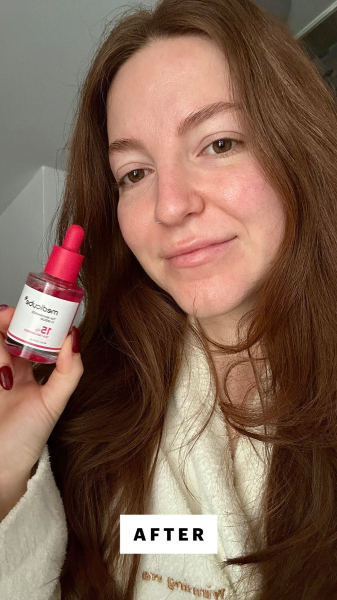
    Allure senior staff writer Elizabeth Gulino applying the Medicube TXA Niacinamide 15% Serum

    Elizabeth GulinoGulino after applying the Medicube TXA Niacinamide 15 Serum

    Gulino after applying the Medicube TXA Niacinamide 15% Serum

    Elizabeth Gulino

    Tester feedback from senior staff writer Elizabeth Gulino

    AccordionItemContainerButtonLargeChevron

    "I like to use Medicube's TXA+Niacinamide 15% Glow Facial Serum in the morning before my SPF—it gives me a hydrating glowy base before I put the rest of my makeup on. There's minimal scent to the serum and it feels nice on the skin—a bit watery, but it sinks into the skin nicely." —Elizabeth Gulino, senior staff writer

    More to know

    AccordionItemContainerButtonLargeChevron

    • Niacinamide percentage: 10%
    • Other key ingredients: 5% tranexamic acid, arbutin, glutathione, ferulic acid, hyaluronic acid
    • Fragrance-free: yes

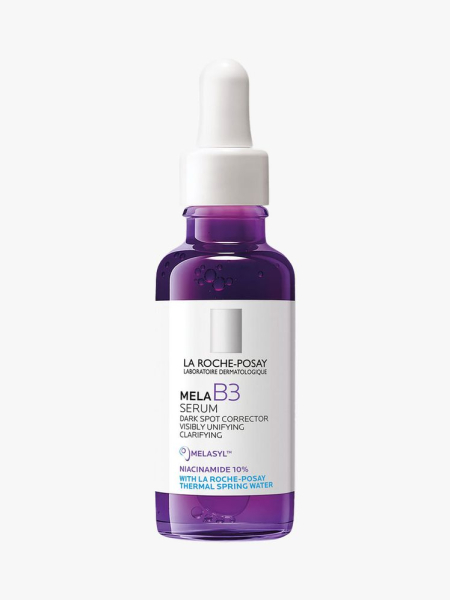
    Best for Dark Spots: La Roche-Posay Mela B3 Dark Spot Corrector Serum

    La Roche-Posay Mela B3 Dark Spot Corrector Serum purple bottle with white dropper cap on light gray backgroundSave to wishlistSave to wishlist

    La Roche-Posay

    B3 Dark Spot Corrector Serum

    $45

    Amazon

    $45

    Ulta Beauty

    $45

    Dermstore

    Allure associate manager of audience development Melanie Curry applying the La Roche-Posay Mela B3 Dark Spot Corrector Serum

    Melanie Curry

    Why we love it: La Roche-Posay’s Mela B3 Serum pairs niacinamide with the brand’s proprietary Melasyl, which acts like a pigment “interceptor,” helping catch excess melanin before it clusters into visible spots—so you’re not just fading discoloration, but helping keep it from setting in to begin with. Niacinamide pulls double duty by evening tone and limiting the amount of pigment that reaches the surface, while retinyl palmitate (a gentler vitamin A derivative also known as pro-retinol) supports cell turnover to gradually lift existing spots.

    Mineral-rich thermal spring water keeps the formula soothing and hydrating, making it a solid option for sensitive skin prone to hyperpigmentation—but since it contains a touch of fragrance and retinol, it’s worth patch-testing first.

    Tester feedback from associate manager of audience development Melanie Curry

    AccordionItemContainerButtonLargeChevron

    “I started using this serum two months ago, and I've seen small improvements. My dark spots (specifically the acne scars under my chin) have slowly started to fade, and my skin has become slightly more even. A little goes a long way with this serum. A drop or two every night before moisturizing, and your skin becomes less discolored and more plump. And while results do take long (don't they always?), they do happen.” —Melanie Curry, associate manager of audience development

    More to know

    AccordionItemContainerButtonLargeChevron

    • Niacinamide percentage: 10%
    • Other key ingredients: Melasyl, retinyl palmitate
    • Fragrance-free: no

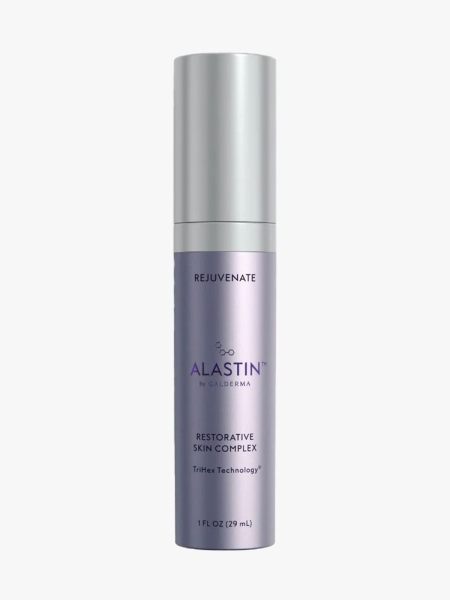
    Best for Mature Skin: Alastin Restorative Skin Complex

    Alastin Restorative Skin Complex purple bottle on light gray backgroundSave to wishlistSave to wishlist

    Alastin

    Restorative Skin Complex

    $230

    Amazon

    $230

    Alastin

    Lee applying the Alastin Restorative Skin Complex

    Christa Joanna Lee

    Why we love it: For all the buzz around TriHex+ and Alastin’s peptide tech, it’s worth noting that niacinamide sits right up top on the ingredient list (just behind water and glycerin), doing a lot of the heavy lifting to keep skin even-toned. For mature skin, this treatment focuses on keeping the renewal cycle moving—helping clear out damaged collagen and elastin so healthier skin can take its place. The latest reformulation adds octapeptide-45 to support collagen, elastin, and hyaluronic acid production, while magnolol helps calm inflammation and l-ornithine lends a subtle firming, plumping effect. Janet Allenby, MD, a board-certified dermatologist based in Delray Beach, Florida, says it’s one of her favorite products containing niacinamide—partly because this vitamin is so compatible with the other highly effective ingredients in this treatment.

    Tester feedback from Lee

    AccordionItemContainerButtonLargeChevron

    “As someone with dry, sensitive skin and a few early signs of aging (read: the appearance of fine lines around my eyes), my first foray into Alastin skin care has been a pleasant surprise. The Restorative Skin Complex with TriHex+ feels like the perfect mix of an ultra-light moisturizer and serum—it sinks in fast but leaves my skin hydrated and smooth all day. After a few weeks, my complexion looks a little plumper and my texture is more even—with hardly any effort at all.” —Christa Joanna Lee, contributing commerce writer

    More to know

    AccordionItemContainerButtonLargeChevron

    • Niacinamide percentage: undisclosed
    • Other key ingredients: TriHex Technology (peptide blend), magnolol, l-ornithine, glycerin
    • Fragrance-free: yes

    More niacinamide serums we like

    Best for Oily Skin: Naturium Niacinamide Serum 12% Plus Zinc 2%

    Naturium Niacinamide Serum 12% Plus Zinc 2% teal bottle on light gray backgroundSave to wishlistSave to wishlist

    Naturium

    Niacinamide Serum 12% Plus Zinc 2%

    $17

    Amazon

    $17

    Soko Glam

    Why we love it: Clocking in as the highest percentage of niacinamide on this list, this formula doesn’t beat around the bush. With 12% niacinamide to “refine pores, even tone, and dial down excess shine”—it’s a strong pick for oily or combination skin, says Y. Claire Chang, MD, a board-certified dermatologist based in New York City. The addition of 2% zinc PCA pulls its weight, too: It regulates oil production and offers mild antibacterial support, which is especially useful if congestion or breakouts are part of the picture. Meanwhile, humectants like propanediol and sodium hyaluronate draw in moisture while helping the actives spread more evenly and absorb more efficiently, so you get the benefits without dryness.

    More to know

    AccordionItemContainerButtonLargeChevron

    • Niacinamide percentage: 12%
    • Other key ingredients: 2% zinc PCA, glycerin, propanediol, sodium hyaluronate
    • Fragrance-free: yes

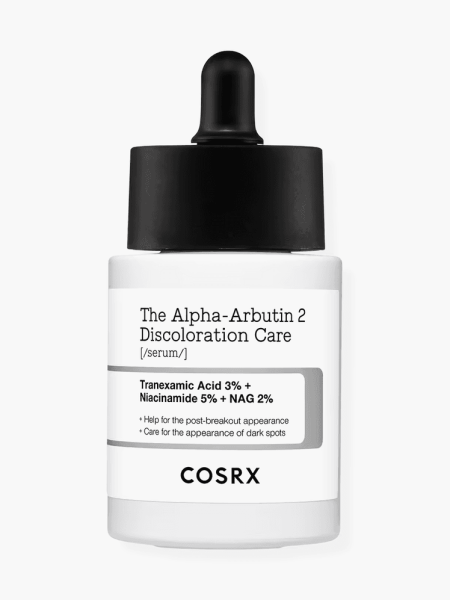
    Best for Sensitive Skin: CosRx Alpha-Arbutin 2 Discoloration Care Serum

    The Alpha-Arbutin 2 Discoloration Care Serum in branded white bottle with  black pipette applicator on light gray backgroundSave to wishlistSave to wishlist

    Cosrx

    The Alpha-Arbutin 2 Discoloration Care Serum

    $25

    Amazon

    $25

    Ulta Beauty

    $25

    Yesstyle

    Why we love it: K-beauty is synonymous with sensitive skin as the focus tends to be on barrier support, gentle actives, and formulas that do the job without pushing your skin too far. CosRx’s Alpha-Arbutin 2 Discoloration Care Serum fits right in: a fragrance-free formula that pairs 2% alpha-arbutin with niacinamide and tranexamic acid to target dark spots without the usual sting. This kind of combination “helps brighten discoloration through multiple pathways while remaining gentle enough for sensitive skin,” says Dr. Chang. Acetyl glucosamine helps refine tone, while madecassoside (a Centella asiatica derivative), panthenol, and allantoin keep reactive skin calm and comfortable.

    More to know

    AccordionItemContainerButtonLargeChevron

    • Niacinamide percentage: undisclosed
    • Other key ingredients: 2% alpha-arbutin, tranexamic acid, acetyl glucosamine, madecassoside, panthenol, allantoin
    • Fragrance-free: yes

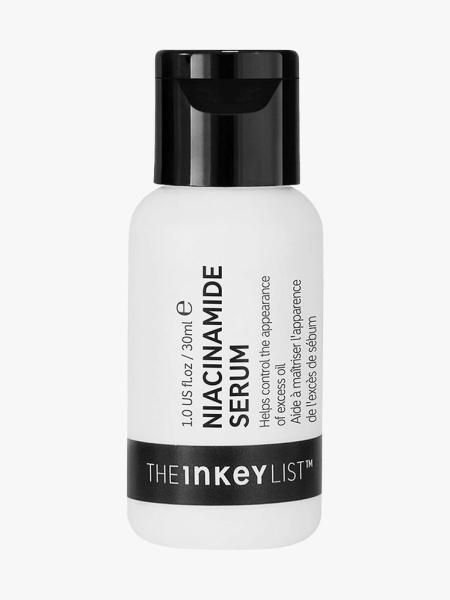
    Best Budget: The Inkey List Niacinamide Oil Control Serum

    The Inkey List Niacinamide Oil Control Serum mini black and white bottle on light gray backgroundSave to wishlistSave to wishlist

    The Inkey List

    Niacinamide Oil Control Serum

    $11

    Amazon

    $11

    Ulta Beauty

    $11

    Sephora

    Why we love it: Niacinamide wears many hats, but in The Inkey List’s Niacinamide Serum, oil control is the main event. This straightforward formula contains 10% niacinamide—an especially effective level, according to Dr. Allenby—which helps regulate excess sebum, minimize the look of pores, and reduce the likelihood of breakouts (and the redness that often comes with them). It’s the kind of serum that keeps shine in check without tipping your skin into that tight, stripped feeling. The texture helps, too: lightweight, fast-absorbing, and nonsticky. With 1% hyaluronic acid, it boosts hydration, while allantoin soothes and supports the skin barrier.

    More to know

    AccordionItemContainerButtonLargeChevron

    • Niacinamide percentage: 10%
    • Other key ingredients: 1% hyaluronic acid, allantoin
    • Fragrance-free: yes

    Frequently Asked Questions

    What does niacinamide do?

    Niacinamide is a form of vitamin B3 with a wide range of benefits, including supporting the skin barrier and minimizing the look of fine lines. "Niacinamide works with your skin's natural chemistry to improve overall skin texture by rebuilding a lipid layer, minimizing the appearance of pores, and preventing UV damage and inflammation as an antioxidant," Seattle-based board-certified dermatologist Brandith Irwin, MD, told Allure.

    Niacinamide is also believed to reduce redness, discoloration, and even acne, according to New York City board-certified dermatologist Marisa Garshick, MD. "In topical forms, it has been shown to reduce sebum production," she told Allure, noting that it's quite gentle on the skin.

    Meet the experts

    • Janet Allenby, MD, a board-certified dermatologist based in Delray Beach, Florida,
    • Y. Claire Chang, MD, a board-certified dermatologist at UnionDerm based in New York City
    • Marisa Garshick, MD, a board-certified dermatologist at MDCS Dermatology based in New York City
    • Brandith Irwin, MD, a board-certified dermatologist and founder of Concierge Dermatology & Laser, based in Seattle, Washington
    • Christina Sun, MD, a board-certified dermatologist at Dermatology Partners based in Philadelphia

    How we test and review products

    When Allure tests a product, our editors look at it from every angle in an effort to best serve you. We review ingredients, scrutinize brand claims, and, when necessary, examine peer-reviewed scientific and medical studies. In addition to testing each and every product that's included in each and every review, we rely on experts who shape their fields, including dermatology, cosmetic chemistry, and medicine, to help us vet the ingredients and formulas.

    For our list of the best niacinamide serums and creams, we considered each product's performance across five primary categories: product ingredients and efficacy, packaging, fragrance, texture, and product wear. Every product was determined to have excelled in each category by our editorial team, which is composed of in-house writers and editors as well as contributors—along with special consideration from board-certified dermatologists. To learn more information on our reporting and testing processes, read our complete reviews process and methodology page.

    Our staff and testers

    A beauty product is a personal purchase. You might be searching for a face cream to address persistent dryness or a new nail product to add to your Sunday self-care routine; you may simply be browsing around for the latest launches to hit the hair market. No matter what you seek or your individual needs and concerns, Allure wants to ensure that you love anything we recommend in our stories. We believe that having a diverse team of writers and editors—in addition to the wide range of outside testers and industry experts we regularly call upon—is essential to reaching that goal.

    After all, can we really say a skin-care product is the "best" for people over 50 if the only testers we've solicited opinions from folks who have yet to hit 30? Can we honestly deem a high-end diffuser worthy of your hard-earned cash if it’s never been tested on curls? We're proud that our staff spans a wide range of ages, skin tones, hair textures, genders, and backgrounds, which means that we are able to fairly assess any beauty product that comes into the beauty closet.
  • Anne Hathaway Revived Her “The Devil Wears Prada Bangs”—See the Video

    Anne Hathaway Revived Her “The Devil Wears Prada Bangs”—See the Video

    Anne Hathaway wears a strapless black gown and long gloves with a diamond necklace and halfup hairstyle.Getty ImagesSave StorySave this storySave StorySave this story

    At the beginning of the original The Devil Wears Prada film, Anne Hathaway's character Andy Sachs strolls into the hallowed halls of Runway magazine looking like an outsider. But when she decides to make the most of the challenge and prove herself, she emerges like a fashion girl butterfly in an all-Chanel outfit, topped off with a set of fresh long, brow-brushing bangs. “You look good,” says Gisele Bündchen's character, and she does! Andy and her bangs are ready to take on the fashion world.

    Now, Andy is back onscreen in the much-anticipated sequel The Devil Wears Prada 2, and while she doesn't have bangs in the movie—at least judging from the various trailers we've seen so far—she sure did on the red carpet in Japan! Hathaway revisited the DWP bangs for the Tokyo premiere and suddenly, it's 2006 all over again.

    Anne Hathaway speaks at a premiere wearing a strapless black dress. Her hair is cut with bold bangs and styled in a...Disney

    Hathaway's hairstylist Orlando Pita revived Andy's fringe with a set of long, full bangs that fell past her brows, nearly touching her lashes, framed by short, face-framing layers that skimmed her jawline. The rest of her hair was pulled into a swingy high ponytail, which gave the bangs plenty of space to shine and also showed off her ruffled, strapless Valentino Couture gown.

    The The Devil Wears Prada 2 press tour is just getting started; Hathaway and co-star Meryl Streep (a.k.a. Miranda Priestly) kicked things off in Mexico City last week, with a bang-less Hathaway wearing a devilishly chic red-tipped French manicure.

    If seeing Hathaway in this throwback fringe has ignited the “Should I get bangs?” craving in you, well, we get it. The best bangs of 2026 are bold and vibrant, made to stand out in a crowd, and her full, Andy Sachs fringe is right on trend. While there probably won't big a big makeover montage in the DWP sequel, there's nothing like a fresh set of fringe to make you feel like a brand-new person.

  • I Tried Facial Fat Grafting—Here’s How I Feel About My Results 2 Years Later

    I Tried Facial Fat Grafting—Here’s How I Feel About My Results 2 Years Later

    before and after images of facial grafting under the eyes and in the temples on a woman. her hair is pulled back the...Courtesy of Dr. TepperSave StorySave this storySave StorySave this story

    Fat: It’s a lumpy, liquid gold that—when used as an injectable—promises lifted cheeks and smoothed skin. Fat has evolved into something of a commodity in the world of aesthetic medicine, where there’s a growing appreciation for its ability to augment—boosting volume, for example, in the cleavage or cheeks (either set)—and to improve skin quality. More and more doctors, and their patients, are saying that fat is the natural-looking volumizer we’re all craving in this era of filler fatigue. It’s one reason why I decided to get facial fat grafting.

    If you’ve been hanging around Allure, you’re probably an expert at this point on how hyaluronic acid-based filler works. If by chance you’re not, here’s the SparkNotes version: It fills where there is facial volume loss and augments areas of the face you might wish to change the shape of, like the lips. Though it’s beloved by many, filler can potentially lead to complications or that puffy appearance known as “pillow face.” While I personally hadn’t experienced facial swelling from filler placement, I did have a mishap from hyaluronic acid filler under my eyes—small, raised mounds (called malar edema) that took several years (yes, years) to resolve naturally.

    Fat, on the other hand, behaves differently than filler: It is harvested (via lipo) from your own body, and once it’s injected back into your face, it becomes a part of the areas where it is placed, says Oren Tepper, MD, a board-certified plastic surgeon in New York City, who performed my own fat grafting procedure. The fat attaches to surrounding tissues, forming a new blood supply and acting as if it had always been there. Not all of the fat cells survive: Over the course of several months about 50 percent of the injected fat takes hold and settles into your face, explains Melissa Doft, MD, a board-certified plastic surgeon in New York City. And what’s left is permanent, unlike hyaluronic acid filler. (While new evidence suggests that hyaluronic acid fillers can last longer in the face than doctors originally thought, it’s not permanent.) Of course, there are risks of complications with fat injection, too, including asymmetry or lumpiness. And in this case, they won’t fade away over time, and can’t be reversed with hyaluronidase (an antidote to hyaluronic acid fillers).

    Though some of the positive effects of facial fat grafting are immediate, your ultimate results are not seen until you’re six months post-op. You might expect to see more dramatic results from a procedure over time—but with facial fat grafting, it works in reverse, since about half of the fat that’s injected doesn’t “take.” Dr. Doft explains that’s because, “When you’re injecting a whole bunch of cells, for those cells to survive, they have to be able to absorb nutrients and then form teeny little blood vessels so that they’re getting nutrients. And the cells that were damaged or are too far away or in the center and can’t get those nutrients, those cells will die.”

    I am now finally at the point where I can see the full results. Let’s just say my grafted fat is surviving and thriving—but it’s certainly settled.

    That’s not necessarily a bad thing. Right after the surgery, I took a look at my face in my phone’s front-facing camera and was stunned to see a completely different person staring back at me. I looked like a South Park character (I just aged myself) with an unnatural-looking round face. Over the next few days, I remained a little swollen and bruised on both sides of my face, mostly by my temples, but my under-eyes were shockingly spared. I developed a weird purple pattern of bruising on the outer corners of both my eyes that looked like winged eyeliner. The pillowy, almost mushy feeling at my temples was the only thing that freaked me out a bit. I was afraid if I touched the area that it would leave a permanent dent and I’d have to go back in to see Dr. Tepper.

    I am happy with my results and will probably stop here for now, but might consider another round of fat injections down the road.

    Today, my face looks fuller than it was before surgery, but not nearly as full as it was post-surgery. Though the fat has remained under my eyes and at my temples, it’s settled and looks natural for me. I tend to notice the fullness in my face more so when I see pictures of myself than when I look in the mirror. I look rejuvenated, my skin quality has improved, there are fewer lines around my eyes when I smile (with or without Botox), and my cheeks look fuller. I couldn’t have asked for anything more from this surgery.

    I am happy with my results and will probably stop here for now, but might consider another round of fat injections down the road. I wouldn't be alone in going back for more. Because of the way fat settles, many patients return for a followup procedure if they want a little more fullness than what they ended up with. And how long will the results last? “We say [facial fat grafting] is semi-permanent,” says Dr. Tepper. “I think your fat transfer is going to last forever. What I can’t do is stop the aging process from continuing—you will continue to lose volume in your cheeks and at your temples at the same rate we would have expected.”

    You can read about my full facial fat grafting experience below:

    In this story:

    • Why I got facial fat grafting
    • A quick lesson (promise!) on facial fat grafting
    • Goodbye filler, hello fat
    • The very real (and detailed) experience of having my stomach fat placed into my face
    • On the healing road—with my abdomen fat now in my face
    • The risks involved with facial fat grafting
    • Drumroll please—how much does facial fat grafting cost?
    • Update, April 2026: My take on facial fat grafting, two years later

    Why I got facial fat grafting

    At 36, I wanted more volume under my eyes and at my temples. Where I used to see fullness and rounder features, I now saw hollowness that, despite my best efforts, no energy device like Morpheus 8 or Sofwave could fix. (I did like the improvement in skin quality that I got from Sofwave though).

    Taking fat from one part of your body and reintroducing it to another is by no means a new procedure. Facial fat grafting dates back to the 19th century, but gained popularity in the 1980s, thanks to the advent of modern liposuction. In the years since, the understanding of the role that fat plays in the overall appearance of the face has evolved and today, almost half a million facial fat grafting procedures are performed worldwide each year, according to a study published in the Journal of Clinical Medicine.

    “Of all the things I’ve seen in my 20-plus years in plastic surgery, I think there is nothing that has changed the paradigm of facial aesthetics more than the appreciation of volume in the face as a whole,” says Dr. Tepper. “We’ve come to realize that fat is important to maintaining the structure of the face—and that we can prepare and safely place fat back into the face to maintain and enhance that structure.”

    Fat has evolved into something of a commodity in the world of aesthetic medicine.

    Fat transfer can add volume and even change the shape of the face, like evening out the under eyes and rounding out the temples. It’s most often performed concurrently with facelifts, blepharoplasties, and brow lifts. “I would say 90 percent of my facial rejuvenation patients, like facelift patients, are getting some [facial fat grafting], as well,” says Dr. Tepper. As a standalone procedure, facial fat grafting saw a 1% rise in the US in 2023 for a total of about 34,000 procedures (a far cry from the 5.3 million hyaluronic acid filler procedures performed the same year). That statistic, however, does not account for the times when it's performed in conjunction with a larger facial rejuvenation procedure, like a facelift. When facial fat grafting is performed on its own, it tends to be on patients in their 20s to mid-40s, explains Dr. Doft. “Some of my patients say, well, let me start with the fat grafting, and put off a facelift for a few years.”

    In my case, I really wanted to address the volume loss at my temples and under my eyes, but I wasn’t willing to try hyaluronic acid fillers again out of a horrible fear that if I dared to put filler in my tear troughs, my malar edema would resurface. (As an asterisk, I continue placing filler into my lips and chin.)

    I ultimately decided to go for a consultation with Dr. Tepper, who specializes in a facial fat grafting procedure that he calls the Boomerang Lift—adding fat to the upper cheeks and around the eyes, in the shape of a boomerang. (Dr. Tepper estimates that the Boomerang Lift accounts for about 25% of the procedures he performs, almost always done as a standalone.)

    At my consultation, I was quite humbled when Dr. Tepper projected a large photo of my face, with every pore and thread vein magnified, to show me where he would be filling with fat: under my eyes, in my upper cheeks, and in my temples.

    Though he said that I didn’t really need the procedure per se, as I have a relatively full face with minimal volume loss, in transferring fat to the areas where hollowing was starting to occur, I would simply be enhancing my features. “By even adding the smallest bit of fat into a face such as yours, it makes a huge difference in enhancing already great features,” Dr. Tepper explained.

    I was excited at the thought that my own fat could correct hollowing and brighten any trace of dark circles under my eyes. Additionally, having fat injected into my temples would lift my brows slightly and round out the upper part of my face.

    A few weeks after my consultation with Dr. Tepper, I decided to schedule my surgery for late February because I wanted to make sure I could take the time off from work (I am a teacher) and not have to go to school swollen and bruised and scare any of the kids away. (Although in hindsight, maybe that wouldn’t have been such a bad idea.) Unlike a quick trip to your dermatologist or plastic surgeon for hyaluronic acid filler, fat grafting involves going under IV sedation, a type of anesthesia administered through a vein, and requires much more forethought and planning.

    before and after images of facial grafting under the eyes and in the temples on a woman. her hair is pulled back the...

    The writer before and six months after facial fat grafting

    Courtesy of Dr Tepper

    A quick lesson (promise!) on facial fat grafting

    I would be remiss as an educator if I didn’t give you some context on fat grafting and what the procedure actually entails. In the biz, we call it “prior knowledge” so listen up!

    “[Fat grafting] is the idea that you’re taking fat from one part of the body and you’re placing it elsewhere,” says Dr. Tepper. The fat is taken by means of liposuction from your abdomen (as was the case for me), flanks, or, if you’re on the thinner side and don’t have enough fat in those areas, the middle and back of the thighs.

    Once the fat is removed and placed in syringes, it’s reintroduced or injected into the areas in the face where you want to add volume. Again, in my case, it was reintroduced into my tear troughs (under eyes) and temples. Dr. Doft explains that once the fat is injected and settled, to only expect “about 50% of the fat to take.” Although in the face, she says, it could be up to 70%. Though fat is used to augment similarly to filler, fat is a live substance and filler is not, so the two are not interchangeable: “As a general rule of thumb, when fat is used for structural support to build foundation and volume, it’s very good,” says Dr. Tepper. “I think when it’s used simply as a replacement for filler, for fine lines and wrinkles, and areas of depression like the nasal labial folds, that’s not good. That’s not what it’s intended for.”

    Goodbye filler, hello fat

    Before my fat transfer, Dr. Tepper said I would have to prep the canvas first. So two weeks prior to my surgery, I had the remaining filler under my eyes dissolved. It was approximately five years old at that point and still causing me grief and swelling.

    Dr. Tepper used hyaluronidase to dissolve my filler and though it stung my undereyes when injected, it hurt so good knowing that the filler was finally being put out of its misery. It’s not exactly necessary to dissolve filler first, says Dr. Doft—there is no contraindication with filler and fat—but your results might not look quite right if fat is injected under filler.

    Beyond that, the majority of my preparation occurred the night before surgery: I ate nothing past 12am and avoided coffee in the morning. I was allowed to have water two to three hours before my surgery but no food.

    The very real (and detailed) experience of having my stomach fat placed into my face

    On the day of my surgery, not counting pre-op and post-op time, the actual procedure took a little under an hour. I opted for IV sedation, a twilight sleep, though a patient has the option to use only local anesthesia for a fat grafting procedure. Personally, I wanted to just wake up with a fuller face without having to endure the poke of the cannula going deep into my skin.

    Before the anesthesia, Dr. Tepper took a pen and drew on my face to indicate the access points where he would be placing the fat. I walked from the consultation room to the operating room and laid down on the table. I turned my head to find the anesthesiologist looking for “a good vein” and moments later I dozed off to sleep.

    Dr. Tepper made two openings in my abdomen—one was right below my belly button and the other a few inches below that—then performed tumescent liposuction (the medicine in the tumescent fluid helps to numb the area and also minimize bleeding). Due to the nature of the procedure and the importance of keeping the fat cells in good condition, he harvested the fat from my abdomen manually (instead of using a power-assisted liposuction machine).

    The next step of the process was preparing my abdomen fat to be transferred into my face: Dr. Tepper let my fat sit out on a table for about 20 minutes so it could “settle by gravity” before being “placed in a centrifuge,” he says. “The way I like to prepare the fat is to roll it out on the table onto some non-stick gauze because it helps to get rid of any excess fluid and then run it through a strainer.” Once the fat was ready, Dr. Tepper placed it into small syringes that are the same size as those used for filler, measuring around 1 milliliter (mL) or 1 cubic centimeter (cc). “You use these really fine cannulas, which are needles with a blunted tip,” he says. With the syringes of my fat ready for injection, Dr. Tepper placed the cannula into the two different access points on both sides of my face: at the corner of my eyebrows to fill the tear trough and cheek area, and at the hairline to fill my temples. These access points were chosen because they are hidden; no one would ever know once I was healed that I had fat transferred to my face. The fat was placed under my muscle and just above the bone and the results showed immediately.

    before and after images of facial grafting under the eyes and in the temples on a woman. her hair is pulled back she is...

    The writer before and six months after facial fat grafting

    Courtesy of Dr. Tepper

    On the healing road—with my abdomen fat now in my face

    Once I regained consciousness in the recovery area after my surgery, I looked weird and swollen, but I knew that the fat would settle over the next couple of weeks so I was happy. The only discomfort I experienced after surgery was in my abdomen. It felt sore, as if I had just completed an intense abdominal workout.

    As soon as I returned home I started on oral antibiotics, which I remained on for a week to prevent an infection, along with oral steroids for five days to minimize swelling. I was advised by Dr. Tepper to relax and stay home for three days post-procedure. I heeded his advice. Despite diligently taking my steroids, I was still a little swollen and bruised on both sides of my face.

    I took extra care of my stomach which was also bruised—and sore. I felt virtually zero discomfort in my face. By the fourth day post-procedure I was back to my normal routine; my foundation and concealer covered up my bruises beautifully. About a week after surgery, I was able to get back to working out–but nothing too intense, Dr. Tepper advised, because my abdomen was still a little sore. He told me to expect 90 to 95 percent of my results at the two-month mark as the skin contracts. “That last 5 percent takes longer,” he says.

    The risks involved with facial fat grafting

    Any surgery involves risk. With facial fat grafting the risks are low but always possible. They include insufficient survival of the fat that was grafted, infection, lumpiness, asymmetries on either side of the face, and growth of the fat cells if you gain or lose weight. While the thought of fat cells expanding in your face sounds extremely scary, Dr. Tepper assured me that you won’t get “isolated specific growth” in just those areas where you reintroduced fat. If you do experience a significant amount of weight gain, these pockets of new fat in your face would grow proportionally to the other areas of your body.

    If a patient is over-injected and wants less dramatic results, the fat can be removed—but it’s extremely difficult to do so. That’s because once the fat is reintroduced into areas of the face it “incorporates into your tissues,” Dr. Tepper explains. It can only be removed surgically by means of liposuction—and the thought of that does not sound fun at all. “A micro-cannula is placed into the face, and micro-liposuction is performed manually,” says Dr. Tepper.

    There is another—very rare, but very serious—potential complication: “It is possible that, when injecting fat, the fat enters an artery and then travels through the arterial system to the brain, leading to a stroke. This is very uncommon and using blunt tip cannulas reduces the risk,” says Dr. Doft. One review of literature, published in the Journal of Clinical Medicine in 2022, states that severe complications “should be considered very rare and almost anecdotal (roughly one in 5 million). Still, it is impossible to know if all the cases of severe complications have been reported.”

    Drumroll please—how much does facial fat grafting cost?

    While filler is certainly more affordable in a single visit, if you continue to use filler over the course of your lifetime, it adds up. I say that partly to soften the blow of how much fat transfer costs: The procedure I got runs between $10,00 to $15,000—the former being the cost of the under eye and cheek area and the latter being the cost if you add fat grafting to the temples. For each additional area of the face that you want grafted, expect to pay an extra $2,500 to $5,000. The cost of facial fat grafting will of course vary based on the surgeon and geographic location. In New York City, prices are on the high end of the spectrum.

    Also, it’s worth considering that some patients wind up going back for a second round to add more fat. It all adds up, but in my opinion, now that I’ve seen my own results, there is just no substitute.

    Update, April 2026: My take on facial fat grafting, two years later

    My results today

    It’s now been almost two years since my fat grafting procedure (specifically, Dr. Tepper’s aptly-named Boomerang Lift) and my results still look great, though I did opt to go for a second fat transfer recently (more on that in just a moment). Looking at pictures of my face before I had the initial fat transfer as compared to today, I still see the difference: I have fullness in the upper part of my cheeks and around my eyes that I didn't have prior. I feel like I look a few years younger now than I did before the surgery. Not to mention that the skin quality in the areas where I had fat transferred has improved significantly—it’s slightly thicker and appears more plump. I would even go so far as to say that skin-care products absorbs better into my skin in those areas.

    What I know now that I wish I knew then

    I had done my fair share of research prior to going through with surgery. I knew the risks that were involved (as outlined below) and I knew that because of the way fat settles that only about 50% would survive the transfer. I also knew that inevitably, I would continue to age and naturally lose volume, so the results would, in a way, be semi-permanent.

    Despite knowing this, I had still hoped that more fat cells would have thrived, particularly around my temples. I had a feeling after seeing my results at one year that I would probably want to go for another fat transfer. Before doing so, I had Sculptra injected into my temples in the hopes of adding volume to that area. The combination of both fat and Sculptra was ultimately the secret sauce that re-volumized that area of my face—at least for a year or so.

    Would I get fat grafting again?

    Not only would I get fat grafting again, but I did this past December with David Shafer, MD, a double board-certified plastic surgeon in New York City. As I mentioned, some patients do wind up going back for another round of fat transfer to add more fat to areas that may have not gotten enough the first time around. This time, I added more to my upper cheek and around my eyes, and also two additional areas: the two horizontal lines in my neck and the backs of my hands.

    I think of fat transfer in a similar vein to most other aesthetic treatments—nothing is ever one and done. There’s maintenance required—and that’s how I viewed that second round of fat transfer. The procedure was almost two years after my first, and to be honest, I see myself doing this again in another couple of years to not only maintain the volume in my face, but to keep my skin quality in-check.

  • Ilia Beauty Sun Serum Mineral Sunscreen SPF 50: Review with Photos

    Ilia Beauty Sun Serum Mineral Sunscreen SPF 50: Review with Photos

    Image contains an Allure editor with the Ilia Sun serum Mineral Sunscreen SPF 50Collage: Paula Balondo; Source images: Courtesy of Allure editor and IliaSave StorySave this storySave StorySave this story

    I doubt that Ilia—the collector of many Allure Best of Beauty and Readers’ Choice Awards—needs an introduction. A quick summary for those unfamiliar: The “clean beauty” brand has built its reputation on effortless, multitasking makeup for people who want to look like themselves (just slightly more hydrated, even-toned, and well-rested). Case in point: Ilia's beloved Super Serum Skin Tint SPF 40, which one Allure editor once described as making her look like she “drinks a gallon of water a day.”

    So it feels less like a pivot and more like an inevitability that Ilia is finally coming out with its first standalone sunscreen, the Sun Serum Mineral Sunscreen SPF 50. While some might still think of Ilia as a makeup brand first, loyalists have long seen it as skin-care-first. (Not exactly news if you’ve been following our Best of Beauty Awards, where we’ve already crowned skin-care standouts like the Bright Start Retinol Alternative Eye Cream and Lip Wrap Reviving Balm.) If anything, this just makes it official.

    Ilia Sun Serum Mineral Sunscreen SPF 50 in branded component on a light gray backgroundSave to wishlistSave to wishlist

    Ilia

    Sun Serum Mineral Sunscreen SPF 50

    $40

    Ilia

    $40

    Sephora

    First things first, this is a mineral sunscreen, featuring 10.5% zinc oxide—a notoriously tricky ingredient to make feel enjoyable to wear. And, at SPF 50, the challenge only gets steeper. (Higher protection typically means more zinc oxide, which often translates to thicker, chalkier formulas—and that heavy white cast no matter how hard you try to blend it out.) “The core challenge is that zinc oxide is a dense, white inorganic pigment that resists elegant aesthetics,” says Sherry Backman, a cosmetic chemist based in Brattleboro, Vermont. “To achieve a serum texture, formulators need to control particle size, dispersion, and the chemistry of the surrounding system, especially pH.”

    The pH of a sunscreen might sound technical, but it comes down to balance. Zinc oxide works best when the formula sits in a middle, neutral range. “Too acidic or too basic, and you risk destabilizing the zinc oxide, which can impact everything from texture to SPF performance,” she says.

    Image may contain Advertisement Poster Astronomy and Outer Space

    Courtesy of Ilia

    All of which is to say, the texture is what got me first, a signal that the pH is where it should be. And I’m not the only one who noticed. “I am a longtime user of mineral sunscreen, and I have never experienced anything like this,” says Shanna Shipin, senior commerce director. “This is such an elegant formula that is so lightweight, it performs like a chemical sunscreen—I can hardly believe that there are mineral blockers in it.”

    Sun Serum is fluid and serum-y, though not quite as runny as the Skin Tint Ilia fans know well. It glides on and blends without resistance—blindfold me, and I’d never guess it was sunscreen.

    Close up video applying the Ilia Sun Serum Mineral Sunscreen SPF 50

    Christa Joanna Lee

    On the skin-care front, Ilia focuses on lightweight but deep hydration. Hyaluronic acid (seven molecular weights, to be exact) is doing the bulk of the heavy lifting here—Backman notes it’s “primarily for hydration, but secondarily, it improves skin smoothness, film support and texture enhancement,” helping counter that dry feel mineral sunscreens can leave behind. The formula’s sugars add another layer by boosting moisture and supporting the skin barrier, while coneflower (echinacea) and arctic root extracts help regulate oil, so you’re not trading dryness for midday shine.

    Importantly, none of this seems to compromise the formula’s stability. Because yes, adding humectants and plant extracts can interfere with zinc oxide if you’re not careful. “They can, especially if they shift pH or introduce electrolytes that destabilize the dispersion,” Backman says. “Well-formulated systems are structured to keep zinc oxide evenly distributed and stable.”

    This, it seems, is one of those formulas that actually gets that mix right—at least from where I’m sitting. On my dry, sensitive skin, it felt impressively hydrating. It melted in seamlessly without catching on the flaky spots around my cheeks and nose, leaving everything looking more plump than parched. In this unpredictable transitional weather we’re experiencing on the East Coast right now, that feels like a minor miracle.

    Lee applying the Ilia Sun Serum Mineral Sunscreen SPF 50

    Christa Joanna LeeAllure contributing writer Christa Joanna Lee before applying the Ilia Sun Serum Mineral Sunscreen SPF 50

    Allure contributing writer Christa Joanna Lee before applying the Ilia Sun Serum Mineral Sunscreen SPF 50

    Christa Joanna LeeLee after applying the Ilia Sun Serum Mineral Sunscreen SPF 50

    Lee after applying the Ilia Sun Serum Mineral Sunscreen SPF 50

    Christa Joanna Lee

    Then there’s the tint—available in two flexible shades, light-medium and medium-deep—which helps counteract the inevitable white cast. As Backman explains, “tinted skin-care products incorporate white, yellow, red, and black pigments blended in various ratios to achieve shades compatible with the lightest to darkest skin tones.” Those pigments (here, in the form of iron oxides) “help offset zinc oxide’s naturally chalky white base, so the formula blends in more seamlessly with skin,” she says.

    Even though I’m pretty fair, I found the light-medium shade surprisingly spot-on. That said, I tend to prefer a slightly warmer finish with my tinted products, so I ended up mixing in a bit of the medium-deep—I found the sheerness of the tint makes it surprisingly flexible across skin tones.

    The finish lands somewhere between natural and softly radiant—not matte, not super-dewy, just convincingly like a glowier second skin. Ilia has always lived in that in-between space: makeup that behaves like skin care, skin care that wears like makeup. Since introducing the Sun Serum Mineral Sunscreen into my routine, my already minimalist approach has been humbled. It’s the ease and sun protection, sure, but also my skin has never looked better.

    Ilia Sun Serum Mineral Sunscreen SPF 50 in branded component on a light gray backgroundSave to wishlistSave to wishlist

    Ilia

    Sun Serum Mineral Sunscreen SPF 50

    $40

    Ilia

    $40

    Sephora

    With a whole team of editors who swear by multiple-times-daily sunscreen usage, everyone wanted to get their hands on this launch for testing. Keep reading for more reviews of the new Ilia Sun Serum from Allure editors.

    Shanna Shipin, senior commerce director

    Allure senior commerce director Shanna Shipin applying the Ilia Sun Serum Mineral Sunscreen SPF 50

    Shana ShipinShipin before applying the Ilia Sun Serum Mineral Sunscreen SPF 50

    Shipin before applying the Ilia Sun Serum Mineral Sunscreen SPF 50

    Shanna ShipinShipin after applying the Ilia Sun Serum Mineral Sunscreen SPF 50

    Shipin after applying the Ilia Sun Serum Mineral Sunscreen SPF 50

    Shanna Shipin

    “When Ilia named it 'Sun Serum,' I didn’t realize that on top of the SPF, it meant you’d have the kind of radiance found at the center of our solar system. I am a longtime user of mineral sunscreen, and I have never experienced anything like this. This is such an elegant formula that is so lightweight, it performs like a chemical sunscreen—I can hardly believe that there are mineral blockers in it.

    It’s not milky, runny, or watery, which is a problem I have with most mineral facial sunscreens out on the market. I sit between the two shades available; I was concerned about the limited selection, but the sunscreen is so sheer that I can wear either one. I’ll be switching from light-medium to medium-deep as my skin tans throughout the year.

    I opt for the ‘four-finger rule’ when applying sunscreen on outdoor days, and I find that the tint completely dissipates after rubbing it in for 20 seconds or so. Once it’s absorbed, my skin is perfectly primed for makeup, though the sunscreen’s lit-from-within effect shines through whether I’m bare-faced or wear makeup over it. (I know lit-from-within is an oft-used marketing term, but that’s actually what it looks like when I use this product!)

    Another rare feat? A mineral sunscreen that doesn’t pill. I’ve been reaching for this product habitually every day (and actually reapplying throughout) in part due to this. One thing: The package feels lovely in the hand, and I love the nod to the sun in its shape, but it is a little puffy, and I imagine it will be hard to squeeze every last bit of the formula out when I get down to the final dregs. That being said, it’s super easy to squeeze the formula out of the pinpoint dispenser for now.

    There's a real radiance that lasts all day when I use the Sun Serum Sunscreen. It’s the kind of product that flips your mentality and makes you want to use it not just because it gives you SPF 50, but because it makes your skin look absolutely brilliant.” —Shanna Shipin, senior commerce director

    Sydney Malone, creative producer

    Allure creative producer Sydney Malone applying the Ilia Sun Serum Mineral Sunscreen SPF 50

    Sydney MaloneAllure creative producer Sydney Malone before applying the Ilia Sun Serum Mineral Sunscreen SPF 50

    Malone before applying the Ilia Sun Serum Mineral Sunscreen SPF 50

    Sydney MaloneAllure creative producer Sydney Malone after applying the Ilia Sun Serum Mineral Sunscreen SPF 50

    Malone after applying the Ilia Sun Serum Mineral Sunscreen SPF 50

    Sydney Malone

    “I have combination skin, so I am always wary of products that will either dry me out or make me appear too oily—I prefer a happy medium. This is especially true of sunscreens, because I have found that there are either mineral formulas that often leave an ashy appearance or sheer ones that are supposed to give a ‘glow’ but, in reality, make me look sweaty.

    When I first squeezed this product out of the bottle, I was scared by the tone of brown that the product was because it seemed like it would be ashy. However, I was pleasantly surprised by how well it applied to my skin and settled. It felt like that perfect mix I look for, and honestly, it was the most impressed I’ve ever been with a facial sunscreen. I didn’t look sweaty; I didn’t look ashy. In fact, you almost couldn’t even tell it was on, which I loved.

    It has a super natural finish, and I wore it for almost nine hours before I washed my face at night, and it never changed. It gave my holy grail sunscreen a run for its money.” —Sydney Malone, creative producer

    Sarah Han, commerce editor

    Allure commerce editor Sarah Han applying the Ilia Sun Serum Mineral Sunscreen SPF 50

    Sarah HanHan before applying the Ilia Sun Serum Mineral Sunscreen SPF 50

    Han before applying the Ilia Sun Serum Mineral Sunscreen SPF 50

    Sarah HanHan after applying the Ilia Sun Serum Mineral Sunscreen SPF 50

    Han after applying the Ilia Sun Serum Mineral Sunscreen SPF 50

    Sarah Han

    “I’m a noted mineral sunscreen—hater is too strong a word, so I’ll say—skeptic. As someone who doesn’t have sensitive skin, I rarely stray away from elegant chemical formulas (particularly Korean sunscreens) just to try hit-or-miss mineral formulas. Still, as a beauty editor, it’s my job to try as much of the market as possible—or that my skin can handle. I’ve definitely found a handful of tolerable mineral formulas over the years, but the constant pilling (whether I’m wearing makeup or not), drying finishes, and white cast (even on my light Asian skin tone!) prove that the category still has room for improvement.

    I went in with low expectations but it was very evident from the first application that the Sun Serum checked all of my boxes. Major points for how lightweight and airy the texture is, but it isn’t so thin that it gets all over my fingers, so applying the product to my index and middle fingers (adhering to the classic two-finger rule) is mess-free. From there, the formula sinks in seamlessly and you can barely detect that it’s there, but my combo skin looks noticeably more radiant—without veering into greasy territory. It wears well throughout the day without a hint of white cast or pilling, even if I apply a standalone moisturizer underneath and base makeup (concealer, blush, the works) on top.

    I will say, if you’re looking for a tinted sunscreen that provides decent coverage, this isn’t the one for you. But then again, that’s not really what the Sun Serum is seeking to do. For all intents and purposes, this is a very breathable, second-skin-like mineral sunscreen just about anyone would like, even the skeptics.” —Sarah Han, commerce editor

    Annie Blay-Tettey, associate beauty editor

    Allure associate beauty editor Annie Blay-Tettey applying the Ilia Sun Serum Mineral Sunscreen SPF 50

    Annie Blay-TetteyBlayTettey before applying the Ilia Sun Serum Mineral Sunscreen SPF 50

    Blay-Tettey before applying the Ilia Sun Serum Mineral Sunscreen SPF 50

    Annie Blay-TetteyBlayTettey after applying the Ilia Sun Serum Mineral Sunscreen SPF 50

    Blay-Tettey after applying the Ilia Sun Serum Mineral Sunscreen SPF 50

    Annie Blay-Tettey

    “I really like it! It's lightweight and sheers out really nicely, and it doesn't leave any white cast or stains on my fingers like some mineral sunscreens. It's not as hydrating or moisturizing as some of my other SPFs, so I'd mainly reach for this in the summer. But, yes, I would definitely reach for this daily.” —Annie Blay-Tettey, associate beauty editor

    Ingrid Fowler, senior art director

    Allure senior art director Ingrid Fowler applying the Ilia Sun Serum Mineral Sunscreen SPF 50

    Ingrid FowlerFowler before applying the Ilia Sun Serum Mineral Sunscreen SPF 50

    Fowler before applying the Ilia Sun Serum Mineral Sunscreen SPF 50

    Ingrid FowlerFowler after applying the Ilia Sun Serum Mineral Sunscreen SPF 50

    Fowler after applying the Ilia Sun Serum Mineral Sunscreen SPF 50

    Ingrid Fowler

    "I'm always on the hunt for mineral sunscreens that blend in and aren't sticky (a tall order!), and this Ilia formula really hits the mark. The super light tint gives the tiniest bit of coverage without leaving any white cast. It feels weightless on my skin and works as a great base for my daily makeup. I also love the cute round bottle; it fits nicely in my bag for on-the-go, and the flat base is great for a bathroom shelf, so it can live anywhere. Big fan!" —Ingrid Fowler, senior art director

    Ilia Sun Serum Mineral Sunscreen SPF 50 in branded component on a light gray backgroundSave to wishlistSave to wishlist

    Ilia

    Sun Serum Mineral Sunscreen SPF 50

    $40

    Ilia

    $40

    Sephora

    Meet the expert

    • Sherry Backman, a cosmetic chemist based in Brattleboro, Vermont

    How we test and review products

    Before reviewing any makeup, we ask questions about a number of factors: What ingredients are in it? Does the brand offer a wide shade range inclusive of consumers with all skin tones and undertones? Is it safe for readers who have sensitive skin or wear contact lenses? Is it on the affordable side or more of a splurge? Is its packaging consciously designed or needlessly wasteful?

    For our review of the Ilia's first sunscreen, we enlisted the help of multiple editors, writers, contributors, and makeup artists to review the products. This ensures our testing base spans different skin tones, genders, and dermatological conditions. We considered each product's performance across four primary categories: ingredients, wear and longevity, packaging, and inclusivity. For more on what's involved in our reporting, check out our complete review process and methodology page.

    Our staff and testers

    A beauty product is a personal purchase. You might be searching for a face cream to address persistent dryness or a new nail product to add to your Sunday self-care routine. You may simply be browsing for the latest launches to hit the hair market. No matter what you seek or your individual needs and concerns, Allure wants to ensure that you love anything we recommend in our stories. We believe that having a diverse team of writers and editors—in addition to the wide range of outside testers and industry experts we regularly call upon—is essential to reaching that goal.

    After all, can we really say a skin-care product is the "best" for people over 50 if the only testers we've solicited opinions from are folks who have yet to hit 30? Can we honestly deem a high-end diffuser worthy of your hard-earned cash if it's never been tested on curls? We're proud that our staff spans a wide range of ages, skin tones, hair textures, genders, and backgrounds, which means that we're able to fairly assess any beauty product that comes into the beauty closet.

  • Do You Really Need a Signature Scent?

    Do You Really Need a Signature Scent?

    A cabinet containing nine of the same perfume bottles.Save StorySave this storySave StorySave this story

    Lately, my TikTok For You Page has been filled with people trying to convince me that my life will be significantly better if only I could identify my “signature scent.” Committing to a singular fragrance means you’ve “peaked as an adult,” according to one content creator; another says it’s a step towards creating a “perfectly chic and timeless lifestyle.” The concept is simple: Find a fragrance that becomes integral to your personal brand, one that you can and should wear every day for as long as you live. Does that sound complicated? No. But it sure as hell sounds boring.

    If you’re a signature scent truther, let me ask you something: Would you wear a plain white T-shirt every single day without fail? Obviously not—besides the questionable hygiene practice, wearing the same thing day in and day out is uninspired and oftentimes inappropriate for the situation at hand. You wouldn’t wear a T-shirt to an important job interview, on your wedding day, or even for a first date—so why should your fragrance routine be one-size-fits-all?

    I’m not the only one who feels this way. “I think fragrance is the new lip gloss,” says Rachel Green, founder of L’Epoque Parfums. "If you look in your lip gloss drawer, you probably have 15 different pinky-nudes that are sort of the same color profile, but there's something a little different about all of them." When Green was first conceptualizing her brand, she was inspired by consumers (like me!) who were no longer interested in committing to one scent—instead, they’re yearning for a fragrance wardrobe. “They want to change their scent with their mood,” she says, adding that the sentiment is the inspiration behind L’Epoque, a French word that translates to “the era.” Fitting, since each bottle is only 30ml (fragrance sizes are usually 50ml or 100ml) for the purpose of being “used, loved, and eventually left behind.” The point is to create “a small archive of who you were” during a given “era.”

    But there are plenty of people who could care less about building a personal scent archive—when I asked for the signature scent devotees to come forward on Instagram, I had almost 30 people swarm my DMs immediately. One of them was Fran, who works in the fragrance industry and has exclusively worn Oud Satin Mood by Maison Francis Kurkdjian since 2023. “It was a blind buy [so I hadn’t smelled it beforehand],” he says. The risk paid off: He hasn’t been without it since. “I do try other things all the time, but I always immediately go back to it." Dena told me she’s been wearing the same scent for the past seven years: Lancôme Idole. Alex says she’s been wearing Prada Candy every day since its release in 2011. “I always get compliments,” she messaged me. Her philosophy: “Don’t fix what’s not broken.”

    While a steady stream of compliments sounds enticing, I still find myself drawn to Green’s concept of a personal archive. After all, fragrance has the power to trigger vivid memories, even decades later. That’s something known as the Proust effect, named after writer Marcel Proust who, in his novel In Search of Lost Time, recalled a trove of childhood memories after smelling freshly-baked madeleine cakes. Venkatesh Murthy, PhD, a Harvard University professor who specializes in the neuroscience of smell, tells me this phenomenon may be possible because of the way our brains are structured. “The regions that are important for making sense of smell are also very close to those that store memories and create emotions,” he says.

    Throughout my life, I’ve had my fair share of Proustian experiences: Aquolina Pink Sugar, for example, reminds me of middle school dances while Britney Spears’ Fantasy causes my stomach to turn in knots, the same feeling I had when I’d sneak into my older sister’s room to steal a few spritzes. On a less traumatic note, Leila Lou, a light, fruity scent from By Rosie Jane, teleports me to the fall of 2022 when I went to Paris for the very first time with two of my best friends.

    Our olfactory system is powerful. But when we inundate it with the same, monotonous smells over and over, do we lose what makes them so special? I ask Dr. Murthy this, but he says there’s not exactly scientific evidence to back it up—he does, however, tell me about a broad concept called adaptation. “When you repeatedly experience something, then you start responding less and less to it in general,” he says. When it comes to scents, people can become desensitized if they’re exposed to the same thing over and over, which, in my opinion, makes dedicating yourself to a signature scent all the more dull.

    “To me, it's sort of like eating the same food every day,” says Dominique Astorino, a content creator based in Paris. “I would get sick of that.” Ironically, Astorino runs an Airbnb experience in the City of Love that’s advertised as an opportunity to “find your signature scent” at fragrance hotspots like Guerlain, Printemps Haussman, and Galeries Lafayette. But instead of zeroing in on a singular perfume, she says people often end up buying discovery sets—collections of mini vials that serve as a preview before investing in a full-size bottle—and are more interested in the shopping experience versus finding a fragrance they’ll wear forever.

    “There's something cool and chic about having a signature scent, but I think your signature scent can evolve or function as your anchor point of the rest of your [fragrance] wardrobe,” she says. Astorino has an all-time favorite scent—Safanad by Parfums de Marly—but since she has 150 perfumes, she “wears something different almost every day.”

    Think of ditching your monotonous perfume routine as a sort of fragrance friction-maxxing. That is, making an effort to disrupt your tolerance for convenience, like reaching for the same ol’ perfume everyday without putting any thought into it. I’m not encouraging you to run out and purchase a roster of perfumes that end up collecting dust on your shelves, but broaden your horizons. Invest in a rotating cast of two or three, and start with a trial size before fully committing to a purchase. “You want to test a perfume in different environments, different climates,” Astorino says. “For women, you want to test it during all four weeks of your cycle because [hormones] impact your sense of scent.”

    Explore other ways scents can mingle with each other—hair perfumes! Body oils! Solid perfumes! They can all join together to create a harmony of aromas that’s unique to you. If you’ve already committed to a lifelong partnership with a fragrance, like Allure’s senior beauty editor Jesa Marie Calaor has, try layering. She sprays DedCool Xtra Milk everywhere but her wrists, saving that space to experiment with other scents. “The base is always the same and feels inherently me, while my wrists are more experimental,” Calaor says. “It’s like the scent version of a mullet. Business in the front, party… near my hands.” If a fragrance mullet doesn’t entice you and you still want to stick to a single scent, so be it—when you hit the bottom of the bottle, though, maybe try to find something else to replace it with.
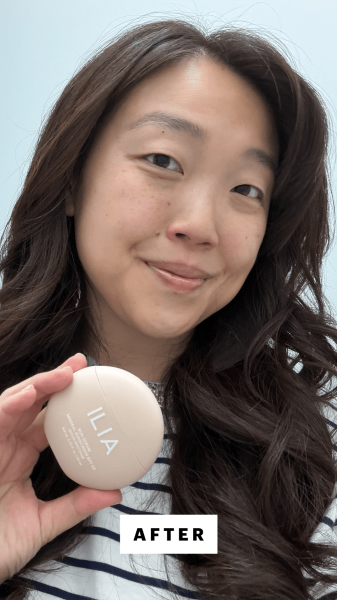
    If you’re unsure of where to start, Astorino says to start taking notes (pun intended) on what perfumes you like and investigate what individual scent components repeatedly come up for you. For me, that’s jasmine and musk. Then, look for variations. My current perfume rotation includes By Rosie Jane Rosie for lazy weekends, NOYZ Detour at the office, YSL Libre for nights out, and Parfums de Marly Athénaïs for when I’m feeling fancy. And when all is spritzed and done? I’m excited to see what’s next.
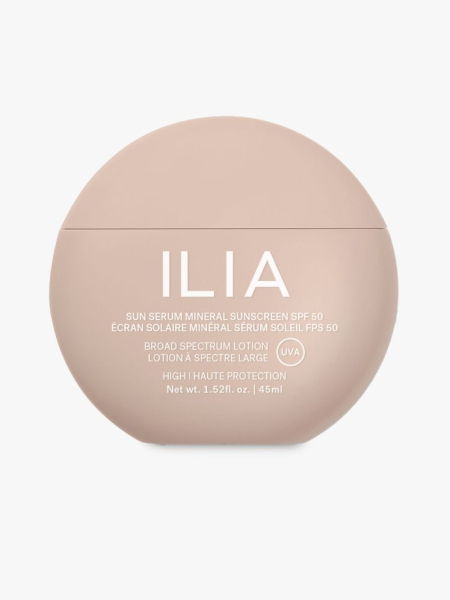
  • Why Did My Perfume Change Color?

    Why Did My Perfume Change Color?

    perfume bottle filled with dark liquid on white backgroundPhoto: StocksySave StorySave this storySave StorySave this story

    A few months ago, I noticed that one of my favorite scents looked a little off. My once-clear By Rosie Jane eau de parfum in Dulce had taken on a honeyed hue. At first, I thought it had gone bad, which was upsetting because I’d only had the bottle for a year; when I spritzed it, though, it smelled the same—sweet like soft-serve ice cream on a bright summer day—but was noticeably richer.
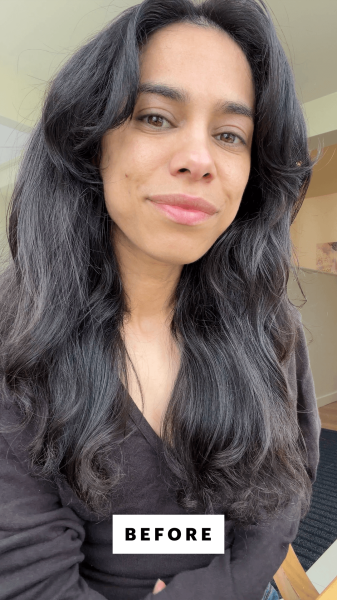
    I wasn’t sure what to do with it. Keep it? Toss it? I turned to TikTok to see if anyone else had experienced something similar—and they had. Viral videos suggested I had inadvertently “macerated” my perfume, a process that many content creators claim makes a fragrance smell better and last longer. Intrigued, I reached out to perfumers to learn more. They reported that maceration is, in fact, a real and vital step in perfumery, but it’s not at all like what you’re seeing in your feed.

    What do “maceration” and “maturation” mean in perfumery?

    “Maceration,” “maturation,” and the word “aging,” have been used interchangeably online, but they all have different meanings. Maceration and maturation are controlled manufacturing steps in perfumery, explains Gustavo Romero of Team of Two Perfumers and founder of the Fragrance Alliance Network, while the at-home process that content creators are touting online is simply aging. (More on that later.)

    Let’s start at the beginning, when maturation produces the initial fragrance potion. In this stage of the scent-making process, raw fragrance oils are blended and left alone to age and amalgamate for about two to three weeks, says Bhushan Patel, a senior technical manager of scent at International Flavors & Fragrances, Inc. Throughout this step, perfumers try different blends—they might add a little more depth with amber or brightness with citrus—until they’re happy with how the mixture smells.

    After that, the scent is macerated. “[Maceration] is not a DIY waiting period at home,” says Romero. This step of developing a perfume, he explains, occurs after a fragrance concentrate is diluted in alcohol. “The mixture [then] rests so the aromatic molecules fully dissolve, distribute evenly, and reach a stable equilibrium.”

    “[Maceration] is not a DIY waiting period at home.”

    Most perfumers consider maceration to be the most important step in perfumery, Romero continues, because it’s when the formula really comes together and smells like a finished fragrance. “It becomes more cohesive and rounded,” he explains. “Harsh edges soften and the composition smells more integrated.” It’s generally the final crucial step before a perfume is transferred to its packaging and readied for the shelves. “Both stages are about integration and stability, not transformation.”

    Why did my perfume change color?

    What some people are referring to online as maceration or maturation is actually aging. It’s a phenomenon that, Patel says, changes the character of a perfume “sometimes beautifully, sometimes not.”

    Adds Romero, a perfume is finished and stable when it hits shelves. “That said, over time, a fragrance can shift,” he says. He explains that lighter elements usually found in the top, like citrus and peppery notes, are more prone to evaporation. After these top notes have faded slightly, the base notes, many of which naturally change color, become more pronounced, “which can make the base feel louder and create the illusion that the perfume has grown stronger.”

    Now back to those content creators: Some are equating a deepening color to a longer-lasting, better-smelling perfume. One of the most prevalent examples on TikTok is Kayali Vanilla 28. A new bottle plucked from a Sephora shelf has a rich caramel color, but content creators are touting the scent after it has aged to a nearly black hue. The smell of the aged perfume has gone so viral that many people are convinced that bottles with darker juice do, in fact, smell deeper and stronger.

    Gabriela Chelariu, principal perfumer at dsm-Firmenich and the nose behind Vanilla 28, says that’s simply not true; the color is due to the behavior of certain ingredients. Natural ingredients, as well as heavier, sweeter accords, are more reactive than other perfume materials. “Vanilla has always been an issue in perfumery because it changes color as it sits in the product,” she says. “Vanillin, which is the main molecule in vanilla, vanilla absolute, and vanilla bean, naturally gets darker.”

    Whether you prefer this darker iteration is entirely up to you. In the case of Vanilla 28, the crowd went wild. As for my Dulce fragrance, I’m enjoying this deeper iteration and have been reaching for it more and more.

    How to tell if your perfume has expired

    A change in your perfume’s color does not indicate that it has expired, nor should you throw it out; our experts say your nose will be able to tell when a fragrance has spoiled. If it smells sour, vinegary, or has a metallic quality that it didn't have before, it’s time to toss it. Adds Romero, if you experience skin sensitivity like itchiness, redness, or another irritation, you should stop using it.

    There’s no harm in intentionally aging your perfume, but Romero reminds us, color fluctuations don’t drastically change a fragrance or make it better: “Transformation stories are great for social media. The real mark of excellence is simpler: a fragrance that smells beautiful and stays that way.”

  • Denise Richards’ Raw Facelift Before-and-After Photos Are the Transparency We Need

    Denise Richards’ Raw Facelift Before-and-After Photos Are the Transparency We Need

    Denise Richards facelift before and afterCourtesy of Dr. Ben Talei – Beverly Hills CenterSave StorySave this storySave StorySave this story

    Denise Richards, 55, earned sex-symbol status with a string of steamy movie roles in the ’90s before posing for Playboy in 2004, and appearing in two seasons of The Real Housewives of Beverly Hills. Now she’s going viral for what may be her most provocative move yet: revealing the unedited before-and-after photos of her recent facelift.

    Richards didn’t just push the boundaries of the current trend toward more aesthetic honesty, she blasted them open, sharing with Allure every intimate detail of her plastic surgery. Most remarkably of all, she revealed her clinical before-and-after photographs as well as candid shots with her face marked up the morning of surgery and bruised and swollen in the days following. Once the story broke, Richards’ surgeon, Ben Talei, MD, a facial plastic surgeon in Beverly Hills, posted his complete set of standardized before-and-after photos of the actor, showing her from multiple angles, unfiltered and makeup-free, with consistent lighting and expressions. Countless outlets picked up the photos, flooding the internet with Richards’ face.

    Historically, only a small handful of famous people have been honest about the plastic surgery behind their “ageless” faces; far, far fewer have ever shared the real before and afters. These photos, which are part of a patient’s medical records, are taken in the plastic surgeon’s designated studio, in accordance with strict guidelines. Pre- and post-op, the patient is photographed using the same camera on the same settings, from a prescribed distance, at specific angles, against uniform backdrops, in consistent lighting, both smiling and straight-faced. What media outlets typically tout as “celebrity before and afters” are something completely different. These are pictures captured out in the world, often at glamorous events, at two separate time points—prior to and following an alleged procedure. The images generally display a fair amount of production value—makeup, good lighting, contrived poses—and may be layered with filters. Richards’ reveal was entirely raw.

    ArrowArrow

    Perhaps that’s why the public response to her disclosure has been overwhelmingly positive—celebratory, even. As a plastic surgery reporter who’s approaching 50, I was thrilled to see it—people commending Richards’ honesty, praising Dr. Talei’s surgical skills, and marveling at the time-machine-like results. Of course, I also scrolled upon the occasional “Why can’t we just be allowed to age naturally?” comment, which tends to turn up, in some form or another, on almost every plastic surgery post. The anti-interventionist who posed the question on Allure’s Instagram received a fair amount of pro-choice pushback from readers (242 of them at last look), including Richards herself, who replied: “I respect your opinion. I believe everyone has a choice and [can] do what's best for them and for me this was best.”

    There’s also been loud applause for the Richards-Talei collab from the plastic surgery community. Dr. Talei’s post featuring the star’s before-and-afters, along with a nuanced breakdown of her surgery, has racked up more than 222,000 likes and roughly 10,000 comments—many from big names in the field. Amongst the barrage of clapping-hands and fire emojis, one comment from Beverly Hills plastic surgeon Ashkan Ghavami, MD, garnered an inordinate amount of attention: Boss moves. My patients pretend like I don’t exist. 😂😂 How do you do it? 👏🏽

    While made in jest, the remark effectively addressed the inexplicably youthful-looking elephant in the room. In recent years, plastic surgery confessions have increased among a certain echelon of stars (Ricki Lake shouting out her facelift surgeon, Kylie Jenner dropping the specs of her breast augmentation). The crème de la crème of Hollywood, however, still rarely acknowledge the work they’ve had done or the doctors behind it, notes Steven Teitelbaum, MD, a plastic surgeon in Santa Monica. Instead, they appear ageless on screens and red carpets but stay quiet, leaving us to wonder, or to suspend our disbelief and accept the falsehood that the rich and famous are impervious to wrinkles, jowls, and wattles. What’s the harm in that? Glad you asked. The harm is that their omissions are actively reshaping our beauty standards: Snatched 60-year-olds are starting to seem normal—a natural fixture in every drama we stream—but in reality, measuring up means having a surgeon on call.

    I might be able to afford a facelift myself if I had a nickel for every celebrity who has attributed their impossibly sharp jawline or elevated brow to something other than surgery.

    On the other hand, perhaps silence is preferable to distractions disguised as transparency. I might be able to afford a facelift myself if I had a nickel for every celebrity who has attributed their impossibly sharp jawline or elevated brow to something other than surgery—to “a little bit of Botox” or a popular skin-tightening gadget (that they’re paid to promote) or their derm in Dubai or daily horseback riding, Pilates, green juice, chia seeds, temple-lifting baby braids, the list goes on.

    The scope of Richards' revelation is unprecedented. And it’s a powerful counterpoint to the nonsense we’ve grown accustomed to. More than just an act of openness, it’s a show of respect. As Richards told Allure, “Being in the public eye since my 20s, people know what I look like—a facelift is not something that I could hide.” Precisely! Yet, plenty of others, who also came of age in the spotlight, have attempted to hide their surgery or credit their refresh to something more palatable—a vacation, a new haircut, or heck, a divorce.

    More than just an act of openness, it’s a show of respect.

    But what about Kris Jenner? Yes, who could forget the media storm last spring, when a rep for Jenner disclosed the name of her plastic surgeon to Page Six in a statement that read, “We can confirm that Dr. Steven Levine did Kris Jenner’s recent work.” How transparent! But, also, not really: Jenner and her team didn’t reveal what, exactly, the “work” entailed or when it was done. And as more than a few plastic surgeons have pointed out to me in the wake of Richards’ reveal, we certainly never saw standardized before and afters of Jenner. The famous Paris photos that accompanied the news of Jenner’s “work” were not clinical photographs obtained from her surgeon. These “afters” were pictures taken in full hair and makeup, carefully edited, and obviously filtered by her team. As Allure contributor Valerie Monroe reminded us when we reached peak Jenner Facelift Frenzy: “Nobody looks like Kris. Not even Kris.”

    Image may contain Kris Jenner Kim Kardashian Accessories Sunglasses Formal Wear Tie Clothing Suit Adult and Person

    Kris Jenner in May 2025

    Getty images

    The so-called “after” images of Jenner “set an unrealistic expectation and a beauty standard that is not attainable at 70 years old,” Austin plastic surgeon Ashley Gordon, MD, wrote in an Instagram post. “A facelift does not airbrush or FaceTune your face.” In conversation with Victoria Garrick Browne on her mental health podcast Real Pod, Philadelphia plastic surgeon Christian Subbio, MD, made a similar observation about Jenner: “A lot of these photos that I see of her after are a beautiful, top-tier facelift plus a filter, plus perfect lighting, plus Kardashian angles and all that. So, what is top-tier, beautiful, 10-out-of-10 work suddenly becomes 13-out-of-10 work and perhaps unrealistic to the average man or woman seeking a facelift. This underscores the importance of standardized before and afters.”

    The scope of Richards' revelation is unprecedented, and a powerful counterpoint to the nonsense we’ve grown accustomed to.

    Having reported on plastic surgery almost exclusively for the past decade, I can tell you this: The best doctors are fastidious about their photography, believing the quality of their before and afters reflects the quality of their outcomes. And in facial plastic surgery circles, Dr. Talei, who photographs patients himself, is famous for his exacting standards. “Ben is very careful about head positioning and expressions—no soft smiles or other subtle expressions that can make results look more impactful," says Jonathan Cabin, MD, a facial plastic surgeon in Washington DC. “And his lighting is pristine.” Dr. Cabin points to the “catchlights” (reflections from the flash) in Richards’ eyes as proof of consistency. These flecks of light accent her irises in the exact same spot in both the before photos and the afters. (Some on social media have noted that her eyes look bluer and brighter in the after pictures, speculating that the lighting was off. But surgeons explain it like this: Richards had an upper blepharoplasty, which removes skin from the top eyelids and reduces hooding, thereby allowing more light to enter the eyes.)

    Technicalities aside, what I find most compelling about Richards’ photos is the pure and relatable emotion in her face. Anyone who’s ever posed for a before photo knows it to be a humbling experience—an act of vulnerability. Taken unforgivingly, for the express purpose of laying bare our perceived flaws and insecurities, these pictures invite judgment and defy deception. They’re honest by design. By consenting to share her before and afters with the world, Richards has recast transparency as something raw and radical—not a trend or talking point, but a moment of truth. And what could be more provocative than that?

    To read more about plastic surgery:

    • Denise Richards Opens Up About Her Facelift
    • No 69-Year-Old Looks Like Kris Jenner IRL. Not Even Kris Jenner.
    • Gen X Is Getting Plastic Surgery Right